Select a checkout option below
Your cart is currently empty.
Continue shopping
 kaguyasu
Content Menu
● The Psychological Impact of Workspace on Leadership
>> Creating a Commanding Presence
>> Reducing Stress through Organization
● Key Features of an Executive Desk That Support Decision-Making
>> Spacious Surface Area for Multitasking
>> Integrated Storage Solutions
>> Ergonomic Design for Comfort and Health
>> Technology Integration
● How the Executive Desk Influences Leadership Style
>> Traditional vs. Modern Desks
>> Desk Placement and Accessibility
● The Role of an Executive Desk in Facilitating Focus and Creativity
>> Reducing Distractions with Thoughtful Design
>> Inspiring Creativity through Aesthetic Appeal
● Executive Desk and Decision-Making Productivity
>> Streamlining Workflow through Accessibility
>> Enhancing Communication During Meetings
● Case in Point: Examples of Effective Executive Desks in Leadership
>> The CEO's Classic Mahogany Desk
>> The Tech Leader's Minimalist Desk Setup
● Choosing the Right Executive Desk for Your Leadership Needs
>> Assessing Your Work Style
>> Balancing Aesthetics and Functionality
>> Considering Space and Budget
● Maintenance and Ergonomics: Sustaining Leadership Efficiency
>> Regular Organization Practices
>> Ergonomic Adjustments
● Conclusion
In the realm of leadership, decision-making is a critical skill that influences the success of organizations and teams. While leadership qualities are often associated with vision, communication, and strategic thinking, the physical workspace — particularly the executive desk — plays a subtle yet pivotal role in enhancing these abilities. The right executive desk is more than just a piece of furniture; it creates an environment that fosters focus, professionalism, organization, and confidence, directly impacting leadership effectiveness and decision-making quality.

Leadership is deeply intertwined with psychology. The environment a leader operates in daily can influence mood, focus, stress levels, and ultimately, decision-making capabilities. An executive desk represents the command center, where ideas form and strategies unfold.
An executive desk with the right size, shape, and design projects authority and confidence. When a leader feels commanding in their physical space, it translates into assertiveness and clarity when making critical decisions.
A cluttered, disorganized workspace can increase stress and reduce productivity. A well-designed executive desk with adequate compartments and surfaces allows the leader to maintain order, thus reducing cognitive load and enabling faster, clearer decisions.
Choosing the ideal executive desk involves considering several essential features that enhance leadership capabilities. These features combine aesthetics, functionality, and ergonomics.
Leaders often juggle multiple documents, devices, and tools simultaneously. A large desk surface provides enough space to spread out work materials, facilitating better access to information during complex decision-making processes.
Drawers, cabinets, and organizers built into the desk allow for easy storage of important files and supplies, ensuring that essential documents are within reach without cluttering the workspace. This accessibility supports quicker retrieval of data and informed decisions.
Long hours of decision-making can be physically taxing. Executive desks designed with ergonomic principles help maintain proper posture, preventing fatigue and discomfort. Features like adjustable heights or standing desk options promote better health and sustained mental clarity during leadership tasks.
Modern leadership relies heavily on technology. Desks equipped with cable management systems, built-in charging ports, and space customized for monitors and laptops enable seamless technology use, minimizing distractions and helping leaders focus on the decision at hand.
The executive desk not only affects functional aspects but also reflects and shapes leadership style. Different desk designs can support varying leadership approaches, from collaborative to authoritative.
Traditional desks with classic wood finishes often symbolize stability and authority, appealing to leaders emphasizing hierarchy and respect. Modern desks, with sleek designs and minimalist setups, fit leaders focusing on innovation and openness.
Where the desk is positioned in the office impacts interpersonal dynamics. A desk placed to allow easy access fosters approachability and collaboration, while a more secluded or commanding placement signals exclusivity and control. Choosing the right desk setup helps leaders align their workspace with their leadership approach.
Leadership decisions require both concentration and creative thinking. The right desk environment supports these sometimes opposing demands by organizing space and inspiring innovation.
A desk designed with designated zones for work materials eliminates clutter and distractions. Clear separation of active projects and reference materials helps leaders maintain focus on the current task without being overwhelmed by other demands.
A visually appealing desk with personal touches and elegant finishes creates a pleasant atmosphere. This ambiance enhances mood and stimulates creative thinking, which is essential for problem-solving and innovative leadership.
Productivity is arguably the most tangible benefit of selecting the right executive desk. The physical setup directly influences workflow efficiency, speed of decision-making, and the quality of outcomes.
Having everything a leader needs within easy reach greatly speeds up work processes. An executive desk that centralizes tools, documents, and devices avoids wasted time searching, enabling decisions to be made faster.
Executive desks often serve as the focal point for meetings and negotiations. Desks designed with seating arrangements and space for collaboration encourage open dialogue and more effective decision-making.
To illustrate how the right executive desk enhances leadership and decision-making, consider these real-world scenarios:
A CEO relying on a traditional mahogany desk with expansive surface and multiple drawers finds that the authoritative style reinforces confidence in stakeholder meetings. Its organization supports methodical review of reports and improves strategic decisions.
A technology executive opts for a minimalist desk with cable management and standing options, fostering an environment focused on innovation. The clean, organized space reduces distractions, promoting faster decision-making in high-pressure situations.
Finding an executive desk that enhances your leadership effectiveness involves understanding your work habits, leadership style, and decision-making needs.
Consider how you organize information, interact with your team, and manage meetings. Do you prefer a collaborative environment or a concentrated individual space? The desk you choose should reflect and support these preferences.
While a beautiful desk creates a positive impression and boosts motivation, functionality ensures sustained productivity. Select a desk that harmonizes both aspects for long-term leadership success.
Your office size and budget constraints will influence desk choices. Prioritize essential features that support decision-making, such as surface area and storage, while staying mindful of spatial limitations.
Owning the right executive desk is just the beginning. Maintaining its condition and ergonomics ensures sustained benefits for your leadership role.
Set routines for tidying your desk to prevent clutter buildup. Organized desks contribute to a clear mind and better decision-making.
Periodically review your desk's ergonomic setup, including chair height and monitor positioning, to avoid fatigue and enhance focus.
The executive desk is a critical, though often overlooked, element in the leadership equation. By carefully selecting a desk that meets physical, psychological, and practical needs, leaders can create an environment that nurtures better decision-making and stronger leadership presence. The right executive desk empowers leaders to operate with confidence, clarity, and efficiency—keys to successful leadership in any organization.

Q1: How does an executive desk affect a leader's confidence?
A1: A desk that projects authority and is organized helps leaders feel more in control, which boosts confidence during decision-making and public interactions.
Q2: Can the wrong desk design hinder leadership performance?
A2: Yes, a desk that is cluttered, uncomfortable, or poorly designed can increase stress and distractions, negatively impacting focus and decision quality.
Q3: What are the must-have features of an executive desk for a busy leader?
A3: Ample surface area, integrated storage, ergonomic design, and technology integration are essential to support multitasking and sustained productivity.
Q4: How important is desk placement in leadership effectiveness?
A4: Very important. Placement affects accessibility and perceived approachability, influencing communication flow and leadership style execution.
Q5: How often should a leader organize and maintain their executive desk?
A5: Regularly—daily quick tidying and weekly in-depth organization help maintain a clutter-free environment that supports clear thinking and decision-making.
Hot Tags: China, Global, OEM, private label, manufacturers, factory, suppliers, manufacturing company

Leather Executive Office Chair with Genuine Leather, Solid Wood & Lumbar Support

Mesh Ergonomic Office Chair with Breathable Mesh & Lumbar Support for Executive Office
Bookcase Storage Cabinet 71 in Tall for Home Office
Curved Reception Desk 47-94 in Wide with Keyboard Tray, File Drawers & LED Lighting
Curved Reception Desk 63-142 in Wide with Keyboard Tray, File Drawers & Fluted Front
Curved Reception Desk 47-150 in Wide with LED Lighting, Keyboard Tray & File Drawers

Ergonomic Office Chair with Swivel, Curved & Dual-Tone for Home Office

Modern Executive Desk with Wireless Charging, Built-In Outlets & Side Storage

Modern Executive Desk 25-110 in Wide with Side Storage for Home Office

Modern Conference Table 59-91 in Wide (4.9-7.6 ft) with Built-In Outlets & Lumbar Support
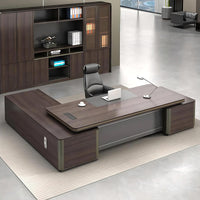
Modern Executive Desk 22-126 in Wide with Curved & Cable Management for Home Office
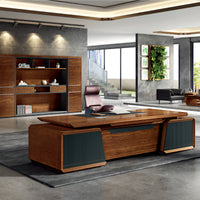
Modern Executive Desk 28-142 in Wide with Walnut for Home Office

Content Menu ● Understanding Modern Executive Desks >> What Defines a Modern Executive Desk? >> Why Choose Modern Designs? ● Features of Minimalist Executive Desks >> Essential Design Elements >> Functional Benefits ● Characteristics of Luxury Executive...
Oct 16, 2025
Content Menu ● Understanding Executive Desk Materials >> The Role of Material in Desk Selection ● Wood Executive Desks: Classic Elegance and Strength >> Types of Wood Used in Executive Desks >> Advantages of Wooden...
Oct 16, 2025
Content Menu ● Understanding the Role of Executive Desks in Branding >> What is an Executive Desk? >> How Executive Desks Reflect Your Brand's Identity ● Key Features of Executive Desks That Boost Brand...
Oct 15, 2025