
Your Cart
Your cart is currently empty.
Continue shopping
Content Menu
● Understanding Conference Table Shapes
>> The Role of Table Shape in Meeting Dynamics
>> Common Table Shapes in Modern Offices
● Round Conference Tables
>> Advantages of Round Tables
>> Disadvantages of Round Tables
>> Best Use Cases for Round Tables
● Rectangular Conference Tables
>> Advantages of Rectangular Tables
>> Disadvantages of Rectangular Tables
>> Best Use Cases for Rectangular Tables
● Comparing Round and Rectangular Tables
>> Meeting Dynamics and Collaboration
>> Space and Room Layout
>> Aesthetic and Style
>> Practical Considerations
● Factors to Consider When Choosing a Conference Table
>> Meeting Size and Frequency
>> Room Layout and Space
>> Meeting Style and Culture
>> Budget and Maintenance
● Design and Customization Options
>> Materials and Finishes
>> Size and Shape Variations
>> Additional Features
● Real-World Applications
>> Case Study: Creative Agency
>> Case Study: Corporate Boardroom
>> Case Study: Startup Office
● FAQs
>> What are the main differences between round and rectangular conference tables?
>> Which table shape is better for small meetings?
>> Can round tables accommodate large groups?
>> Are rectangular tables more formal than round tables?
>> How do I choose the right table shape for my office?
Choosing the right conference table for your meeting room is more than just a matter of style—it's a decision that can impact productivity, collaboration, and the overall atmosphere of your workspace. Among the most popular options are round and rectangular conference tables, each offering distinct advantages and drawbacks. This article explores the key differences between round and rectangular conference tables, helping you determine which shape best fits your business needs, meeting style, and office environment.

The shape of a conference table plays a crucial role in shaping the dynamics of meetings. It influences how people interact, communicate, and collaborate. Round tables are often associated with equality and open discussion, while rectangular tables are linked to hierarchy and structured agendas.
While round and rectangular tables dominate the market, other shapes like oval, square, and boat-shaped tables also exist. However, round and rectangular tables remain the most widely used due to their versatility and compatibility with various room layouts.
Round conference tables are favored for their ability to foster a sense of equality among participants. With no head or foot, every seat is equal, encouraging open dialogue and collaboration. This makes round tables ideal for brainstorming sessions, team meetings, and discussions where everyone's input is valued.
- Promotes Equality: No designated “head” of the table, reducing hierarchy.
- Encourages Participation: Easier for everyone to see and hear each other.
- Fosters Collaboration: Encourages open discussion and idea sharing.
- Space Efficiency: Can fit well in smaller or circular rooms.
Despite their benefits, round tables have some limitations. They may not be suitable for large groups, as seating can become cramped. Additionally, they offer less surface area for documents and laptops compared to rectangular tables.
- Limited Seating Capacity: Not ideal for large meetings.
- Less Workspace: Smaller surface area for materials.
- Layout Constraints: May not fit well in rectangular rooms.
Round tables are best suited for small to medium-sized meetings, team collaborations, and informal discussions. They work well in creative environments, startups, and organizations that value inclusivity and teamwork.
Rectangular conference tables are the traditional choice for formal meetings and boardrooms. They provide ample workspace for documents, laptops, and presentation materials. The clear head and foot positions can help establish a hierarchy, making them suitable for structured agendas and decision-making processes.
- Ample Workspace: Large surface area for materials and equipment.
- Clear Hierarchy: Designated head and foot positions for formal meetings.
- Scalability: Can accommodate larger groups.
- Versatility: Fits well in rectangular rooms and traditional office layouts.
Rectangular tables can create a sense of hierarchy, which may discourage open dialogue. Participants at the ends may feel less involved, and communication can be less fluid compared to round tables.
- Hierarchical Feel: May discourage equal participation.
- Less Inclusive: Participants at the ends may feel isolated.
- Space Requirements: Requires more room, especially for larger tables.
Rectangular tables are ideal for formal meetings, boardrooms, and large group discussions. They are commonly used in corporate environments, law firms, and organizations that require structured agendas and clear leadership roles.
Round tables excel in fostering collaboration and open discussion, making them perfect for brainstorming and team meetings. Rectangular tables, on the other hand, are better suited for structured meetings where hierarchy and clear roles are important.
Round tables are more space-efficient and can fit well in smaller or circular rooms. Rectangular tables require more space but are versatile and can be arranged in various configurations to suit different room layouts.
Round tables offer a modern, contemporary look and can be a focal point in a room. Rectangular tables provide a classic, professional appearance and are often associated with traditional office settings.
When choosing between round and rectangular tables, consider the size of your meetings, the nature of your discussions, and the layout of your meeting room. Both shapes have their strengths and can be selected based on your specific needs.
The size and frequency of your meetings should influence your choice. Round tables are best for small, frequent meetings, while rectangular tables are better for larger, less frequent gatherings.
Consider the layout and available space in your meeting room. Round tables are more flexible and can fit in various room shapes, while rectangular tables require more space and are best suited for rectangular rooms.
Your organization's meeting style and culture should also be taken into account. If you value collaboration and inclusivity, a round table may be the better choice. If you prefer structured, formal meetings, a rectangular table may be more appropriate.
Both round and rectangular tables come in a range of prices and materials. Consider your budget and the maintenance requirements of each type when making your decision.
Conference tables are available in a variety of materials, including wood, glass, metal, and laminate. Each material offers different aesthetic and functional benefits, so choose based on your office decor and durability needs.
Both round and rectangular tables come in various sizes and shapes. Customization options allow you to tailor the table to your specific requirements, whether you need a compact round table for a small team or a large rectangular table for a boardroom.
Modern conference tables often come with additional features such as built-in power outlets, cable management systems, and adjustable heights. These features can enhance the functionality and convenience of your meeting space.
A creative agency chose round conference tables to encourage open dialogue and collaboration among team members. The round tables fostered a sense of equality and helped generate innovative ideas during brainstorming sessions.
A corporate boardroom opted for a large rectangular table to accommodate formal meetings and structured agendas. The clear hierarchy and ample workspace supported decision-making processes and professional discussions.
A startup office used a combination of round and rectangular tables to suit different meeting needs. Round tables were used for team collaborations, while rectangular tables were reserved for client presentations and formal meetings.

Round tables promote equality and open discussion, while rectangular tables support hierarchy and structured agendas. Round tables are better for small, collaborative meetings, while rectangular tables are ideal for larger, formal gatherings.
Round tables are generally better for small meetings as they encourage equal participation and open dialogue.
Round tables are less suitable for large groups due to limited seating capacity and workspace.
Yes, rectangular tables are often associated with formal meetings and structured agendas, while round tables are linked to informal, collaborative discussions.
Consider the size and frequency of your meetings, the layout of your meeting room, and your organization's meeting style and culture when choosing between round and rectangular tables.
Hot Tags: China, Global, OEM, private label, manufacturers, factory, suppliers, manufacturing company

Leather Executive Office Chair with Genuine Leather, Solid Wood & Lumbar Support

Mesh Ergonomic Office Chair with Breathable Mesh & Lumbar Support for Executive Office
Bookcase Storage Cabinet 71 in Tall for Home Office
Curved Reception Desk 47-94 in Wide with Keyboard Tray, File Drawers & LED Lighting
Curved Reception Desk 63-142 in Wide with Keyboard Tray, File Drawers & Fluted Front
Curved Reception Desk 47-150 in Wide with LED Lighting, Keyboard Tray & File Drawers

Ergonomic Office Chair with Swivel, Curved & Dual-Tone for Home Office

Modern Executive Desk with Wireless Charging, Built-In Outlets & Side Storage

Modern Executive Desk 25-110 in Wide with Side Storage for Home Office

Modern Conference Table 59-91 in Wide (4.9-7.6 ft) with Built-In Outlets & Lumbar Support
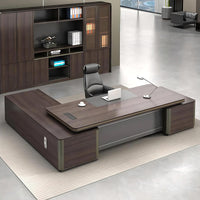
Modern Executive Desk 22-126 in Wide with Curved & Cable Management for Home Office
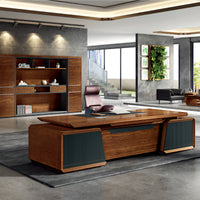
Modern Executive Desk 28-142 in Wide with Walnut for Home Office

Content Menu ● The importance of ergonomics in conference environments ● Key ergonomic design principles ● Common table shapes and their ergonomic implications ● Materials matter: balance aesthetics, durability, and comfort ● Customization: tailoring tables...
Oct 23, 2025
Content Menu ● Aesthetics and first impressions ● Durability and maintenance considerations ● Acoustics and collaboration ● Adaptability and modularity ● Maintenance routines and lifecycle ● Environmental impact and sustainability ● Cost considerations ● Use-case scenarios ● Customization and...
Oct 23, 2025
Content Menu ● Why Choose Customizable Executive Desks? >> Enhancing Office Functionality >> Reflecting Personal and Corporate Style >> Supporting Productivity with Smart Features ● Key Factors to Consider When Choosing Executive Desks >> Understanding Your...
Oct 22, 2025