Select a checkout option below
Your cart is currently empty.
Continue shopping
 kaguyasu
Content Menu
● Table of Contents
● Understanding Reception Desk Evolution
>> The Reception Area in Context
>> Historic Reception Designs
● Defining Modern Reception Desks
>> What Qualifies as a Modern Reception Desk?
>> Key Features
>> Where Are Modern Reception Desks Used?
● Exploring Modular Reception Stations
>> What Is a Modular Reception Station?
>> Core Attributes
>> Typical Environments for Modular Stations
● Key Differences Between Modern and Modular Reception Units
● Design and Aesthetics Comparison
>> The Visual Appeal of Modern Reception Desks
>> The Practical Design of Modular Stations
>>> Material Choices
>> Ergonomics and Staff Experience
● Functionality: Workflow, Space, and Accessibility
>> How Modern Reception Desks Encourage Efficient Workflow
>> Modular Reception Stations and Space Management
>> Accessibility
● Flexibility and Customization
>> Modern Desks: Customization at the Outset
>> Modular Stations: Adaptable for Future Change
>>> Examples of Modular Customizations
● Cost Considerations
>> Initial Purchase and Long-Term Investment
>> The Budget Factor
● Installation and Maintenance
>> Installation Process
>> Maintenance Implications
>> Durability and Lifespan
● Choosing the Right Option: Factors to Consider
>> Type of Business or Organization
>> Space Constraints
>> Staff Roles and Client Flow
>> Brand and Aesthetic Preferences
● Frequently Asked Questions (FAQs)
>> 1. What is the main advantage of a modern reception desk?
>> 2. When should I choose a modular reception station?
>> 3. Are modular stations less durable than modern desks?
>> 4. Can modern reception desks be upgraded or expanded?
>> 5. Do both types accommodate accessibility needs?
The reception area is often considered the heart of any commercial space, providing the first impression to visitors, clients, and employees alike. Reception furniture, especially the desk or station at the front, plays a critical role not only in aesthetics but also in functionality. With advancing trends in office design and the evolution of workspace needs, two furniture solutions dominate contemporary environments: modern reception desks and modular reception stations. While their terminology may sometimes be used interchangeably, their differences are significant in terms of design, purpose, flexibility, and usability.
In this comprehensive guide, we will explore what sets modern reception desks apart from modular reception stations, investigate their features, benefits, and drawbacks, and help office managers, designers, and business owners make informed decisions for their workspace.

- Understanding Reception Desk Evolution
- Defining Modern Reception Desks
- Exploring Modular Reception Stations
- Key Differences Between Modern and Modular Reception Units
- Design and Aesthetics Comparison
- Functionality: Workflow, Space, and Accessibility
- Flexibility and Customization
- Cost Considerations
- Installation and Maintenance
- Choosing the Right Option: Factors to Consider
- Frequently Asked Questions (FAQs)
- Article Word Count
- Article Summary
Reception areas have undergone significant changes over recent decades. Once a mere checkpoint for guest sign-ins, the reception desk has transformed into a space reflecting a company's brand, priorities, and the importance placed on client relations.
Earlier reception desks were more about utility: often bulky, ornate, and static. They signaled authority and separation but frequently neglected the ease of communication and adaptability needed in fast-evolving work environments.
Modern reception desks encapsulate the spirit of contemporary office design. They generally refer to single-unit, non-modular fixtures characterized by clean lines, innovative materials, and functionality tailored for today's workstyles. These desks often prioritize both visual impact and ergonomic considerations, using materials like glass, metal, engineered woods, and high-quality laminates.
- Contemporary Aesthetics: Smooth surfaces, minimal ornamentation, integrated lighting, and color schemes that complement modern office environments.
- Functional Design: Considerations for cable management, storage compartments, and accessibility for frontline personnel.
- Single Unit Construction: These desks are designed and manufactured as a complete piece, often customized to fit a particular space but not readily changeable or extendable.
You'll often find modern reception desks in:
- Corporate offices
- Boutique hotels
- Medical practices and clinics
- Creative firms
- Galleries and showrooms
They are ideal where the reception area is compact or where a strong aesthetic statement is desired.
A modular reception station is a furniture system composed of multiple interlocking or connectable units. Unlike single-piece desks, these stations are designed for versatility, allowing businesses to configure, reconfigure, expand, or adapt the station based on changing needs.
- Scalability: Add or remove sections easily, responding to shifts in staff or workflow.
- Customizability: Choose from different finishes, surfaces, heights, attachable shelves, and drawers.
- Adaptability: Ideal for collaborative environments, shared workstations, and locations where the traffic flow or space requirements fluctuate.
Modular solutions commonly appear in:
- Large medical offices or clinics with multiple receptionists
- Universities and educational institutions
- Co-working spaces
- Government or public service buildings
They function best in large, dynamic settings or where future scalability is anticipated.
Below is a comparison highlighting the critical distinctions.
| Feature | Modern Reception Desk | Modular Reception Station |
|---|---|---|
| Construction | Single, fixed unit | Multiple, configurable units |
| Flexibility | Limited | High; can be rearranged/expanded |
| Customization | Typically at purchase | Ongoing, modular upgrades possible |
| Ideal Space | Smaller/composed settings | Large/adaptable environments |
| Installation | Fast; one-time | May need assembly and periodic changes |
| Cost | Varies; generally upfront | May accrue with add-ons and changes |
| Lifespan | Long, if well maintained | Can be extended through reconfig |
| Visual Impact | Strong, focus-oriented | Functional, adaptable |
Modern desks often serve as statement pieces. A well-crafted unit anchors the reception area, complementing or contrasting with surrounding décor. Sleek designs utilize premium materials, sometimes incorporating corporate branding or unique color palettes to encourage a sense of arrival.
Modular stations focus on adaptability. They may not have the singular visual punch of a modern fixed desk, but their varied layouts allow for creative configurations. This flexibility can also enable integration with current or changing workplace themes.
- Modern Desks: Glass, high-gloss laminates, brushed metal, LED accent lighting.
- Modular Stations: Durable laminates, reconfigurable panels, lightweight frames for easy movement.
Both modern and modular units account for ergonomics, though modular systems can be more easily adapted to individual staff needs or physical requirements, thanks to adjustable modules and accessories.
Their one-piece construction typically means less flexibility but a more organized workspace. Storage is designed into the desk, helping reduce clutter and streamlining task flow. For offices with a consistent front desk need, this can boost productivity.
Modular stations shine in environments requiring:
- Frequent task reallocation (e.g., registration to information services)
- Multiple staff members sharing the area
- Expansion or reduction based on office moves or company growth
Both types can be designed for ADA (Americans with Disabilities Act) compliance, with modular systems offering easier retrofitting for accessibility features.
These desks can be selected in various finishes, shapes, and configurations, but significant changes post-installation are difficult. Businesses must plan for all foreseeable needs during the purchase phase.
Modularity means you can frequently adapt the desk's shape, size, number of stations, and features with relative ease. This is ideal for organizations likely to undergo layout changes, staff fluctuation, or functional overhauls.
- Adding or removing privacy panels
- Incorporating extra cabinets or shelves as storage needs change
- Adjusting workstation heights for different users
- Modern Reception Desks: May have a higher upfront cost, especially for designer models or large custom pieces. Ongoing costs are low unless a replacement is necessary.
- Modular Reception Stations: The initial investment might be comparable or slightly higher, but additional costs can be incurred for expansion, reconfiguration, or spare parts.
Organizations with limited budgets might prefer modern desks for their straightforward pricing and reduced complexity. However, modular solutions offer better value in rapidly changing or expanding environments.
- Modern Desks: Delivered as a single piece or a few large segments. Setup is generally swift with minimal disruption.
- Modular Stations: Require assembly and possibly future reconfigurations as needs change, sometimes necessitating additional labor.
Modular systems may need more frequent adjustments, but individual components are easier to replace or upgrade without replacing the entire system.
Both types can be long-lasting if constructed from quality materials and maintained appropriately. The longevity of modular units benefits from the ease of replacing or updating specific parts, extending the overall lifecycle.

- A boutique design firm might prefer a bold, modern desk as a brand statement.
- A busy medical clinic may need the flexibility and scalability of a modular system.
- Smaller lobbies benefit from the fixed footprint and focus of a modern desk.
- Large, open foyers are better suited for modular systems, which can be expanded as needed.
- If the reception is managed by one or two staff with limited variation in duties, a modern desk suffices.
- For rotating teams, multiple services, or high-traffic environments, modular stations offer superior adaptability.
- Modern desks are suited for companies wanting a strong, fixed visual identity.
- Modular stations are practical for organizations emphasizing function over form or expecting rapid growth.
Modern reception desks offer strong aesthetics and are generally designed for efficiency and visual impact. They are best for businesses seeking a fixed, professional welcome point.
Opt for a modular reception station if your organization is likely to experience change, such as staff turnover, evolving workflows, or space reconfiguration needs.
Not necessarily. Modular stations built from high-quality materials are just as robust. The main difference is that modular parts are easy to replace if damaged.
Generally, no. Modern desks are fixed in shape and size. While some customization exists at purchase, retrofitting is usually impractical.
Yes. Both modern and modular solutions can be designed to meet ADA requirements, but modular stations may offer easier adjustments post-installation for accessibility.
Hot Tags: China, Global, OEM, private label, manufacturers, factory, suppliers, manufacturing company

Leather Executive Office Chair with Genuine Leather, Solid Wood & Lumbar Support

Mesh Ergonomic Office Chair with Breathable Mesh & Lumbar Support for Executive Office
Bookcase Storage Cabinet 71 in Tall for Home Office
Curved Reception Desk 47-94 in Wide with Keyboard Tray, File Drawers & LED Lighting
Curved Reception Desk 63-142 in Wide with Keyboard Tray, File Drawers & Fluted Front
Curved Reception Desk 47-150 in Wide with LED Lighting, Keyboard Tray & File Drawers

Ergonomic Office Chair with Swivel, Curved & Dual-Tone for Home Office
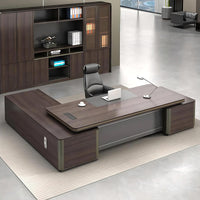
Modern Executive Desk 22-126 in Wide with Curved & Cable Management for Home Office
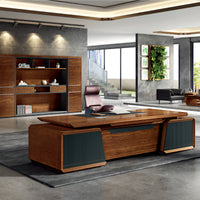
Modern Executive Desk 28-142 in Wide with Walnut for Home Office

Content Menu ● Table of Contents ● The Value of a Modern Reception Desk >> Why Your Reception Desk Matters >> How Reception Desks Influence Workflow ● Top 10 Modern Reception Desks That Will Transform...
Jul 15, 2025
Content Menu ● The Strategic Importance of Reception Desks in Branding >> First Impressions Matter >> Reflecting Corporate Identity Through Design ● Design Trends in Modern Reception Desks >> Sleek and Minimalistic Aesthetics >> Sustainable and...
Jul 14, 2025
Content Menu ● Design and Aesthetics >> Complementing Office Style and Brand Identity >> Minimalistic and Streamlined Appearance ● Functionality and Ergonomics >> Ample Workspace and Organized Layout >> Adjustable Height and Ergonomic Accessories >> Comfortable Lighting...
Jul 14, 2025