Select a checkout option below
Your cart is currently empty.
Continue shopping
 kaguyasu
Content Menu
● Understanding the Basics: L-Shaped and Straight Reception Desks
>> What Is a Straight Reception Desk?
>> What Is an L-Shaped Reception Desk?
● Space Utilization and Layout Considerations
>> Optimizing Office Space with L-Shaped Desks
>> Space Efficiency of Straight Desks
● Workflow and Functional Benefits
>> Enhanced Multitasking with L-Shaped Desks
>> Simplicity and Focus with Straight Desks
● Ergonomics and Comfort Considerations
>> Challenges and Advantages of L-Shaped Reception Desks
>> Ergonomics of Straight Reception Desks
● Aesthetic and Design Flexibility
>> Visual Impact of L-Shaped Desks
>> Sleek Simplicity of Straight Desks
● Cost and Budget Considerations
● Final Thoughts: Which Is Better?
● Frequently Asked Questions (FAQs)
When selecting a reception desk for your office or business, choosing between an L-shaped reception desk and a straight reception desk is a common dilemma. Both types have distinct advantages and disadvantages that can impact space utilization, workflow efficiency, aesthetics, and overall office functionality. This article explores the differences between L-shaped and straight reception desks, helping you determine which is better suited for your needs.

A straight reception desk is a classic, rectangular desk featuring a simple, linear design. It typically consists of a single flat surface and is often placed against a wall or positioned centrally in a room. Due to its straightforward shape, it offers a clean and minimalist aesthetic, fitting easily into various office layouts.
An L-shaped reception desk consists of two connected desk surfaces forming a right-angle “L” shape. This design usually includes a primary work surface and an additional extended surface, creating a corner workspace. It takes advantage of corner spaces and offers considerably more surface area than a straight desk.
L-shaped desks are lauded for their ability to utilize corner areas effectively. They provide a larger workspace overall, combining two work surfaces that create separate zones for multitasking or organizing different office tasks. This makes them ideal for busy reception areas where the receptionist may need space for a computer, phone, paperwork, and visitor interaction all at once.
However, L-shaped desks take up more room than straight desks. They require a corner or sufficient space along two adjoining walls for optimal placement. This can pose challenges in smaller or compact reception areas, where fitting an L-shaped desk may feel cramped or obstruct traffic flow.
Straight reception desks are versatile and require less room than L-shaped desks. Their simple, linear form means they can fit easily against walls, in compact spaces, or even centrally in a room. This flexibility makes them a preferred choice for smaller offices, boutique businesses, or environments where space is at a premium.
Moreover, straight desks create a clean and open look, which can contribute to a more welcoming and less cluttered reception area. Their smaller footprint often allows for smoother movement around the desk and reception space.
The L-shaped design naturally facilitates multitasking by providing dual workspace zones. A receptionist can designate one side for computer work and administrative tasks, while the other can serve for welcoming guests, organizing documents, or using additional devices like printers or phones.
This type of desk supports an efficient workflow, reducing the need to constantly rearrange materials. The separation of tasks aligns well with busy reception duties where simultaneous handling of multiple responsibilities is standard.
Straight desks offer an uninterrupted work surface, allowing for a clean and focused setup. They suit receptionists who prefer minimalism or those whose roles require less multitasking. The single continuous surface is ideal for spreading out documents or equipment without feeling crowded by an extended corner section.
A straight desk's simplicity can also contribute to faster cleaning and upkeep, maintaining a tidy reception environment with ease.
While L-shaped desks offer ample workspace, they may also restrict legroom because of their corner design. Receptionists might experience limited mobility under the desk or discomfort if not properly sized. Additionally, these desks are generally heavier and more difficult to move or rearrange within the office.
Some modern L-shaped desks come with modular components allowing partial reconfiguration or separation into two parts, increasing adaptability. However, adjustable-height options are less common and usually more costly, potentially limiting ergonomic adjustments.
Straight desks tend to provide better legroom and more straightforward ergonomic setups. They are easier to pair with adjustable chairs, keyboard trays, and monitor stands, promoting healthier posture and reducing strain. Their lighter weight also makes repositioning or moving them more convenient.
For environments where the receptionist's comfort and flexibility are priorities, straight desks generally have an ergonomic edge.
The L-shaped desk projects a professional and substantial presence, often becoming a signature piece in the reception area. Their larger size and distinctive shape can create a more commanding visual impact, which may enhance the impression of a well-established and organized business.
Additionally, L-shaped desks often feature built-in storage components like drawers and cabinets under each section, contributing to a neat and elegant look by minimizing clutter.
Straight desks exude simplicity and versatility, effortlessly matching various décor styles from modern minimalistic to traditional offices. Their straightforward design allows greater freedom to complement other furnishings or reception area elements.
They also provide an open space that can be decorated with branding materials or welcoming touches without overwhelming visitors visually.
Straight reception desks typically cost less than L-shaped desks due to their simpler construction and smaller size. For businesses with tight budgets or those furnishing multiple workstations, straight desks offer a cost-effective solution without sacrificing essential functionality.
Conversely, L-shaped desks are often more expensive, factoring in additional materials, design complexity, and sometimes built-in storage options. However, for businesses that require extensive workspace and multitasking efficiency, the added investment can be justified by improved productivity.
Neither the L-shaped reception desk nor the straight reception desk is inherently better; the ideal choice depends on your specific space, workflow needs, ergonomics, aesthetic preferences, and budget.
- For larger reception areas with corner space available and the need to multitask extensively, L-shaped desks provide excellent workspace flexibility and separation of tasks.
- For smaller reception areas, tight budgets, or simpler work functions, straight desks offer adaptability, comfort, and cost savings.
Companies with fluctuating workspace requirements might consider modular desk systems that combine both features, enabling reconfiguration from straight to L-shape and vice versa.
Q1: Can an L-shaped reception desk fit in a small office?
A1: L-shaped desks usually require more space and a corner placement, so they may not fit well in small offices without making the area feel cramped.
Q2: Are L-shaped desks more ergonomic than straight desks?
A2: Not necessarily. L-shaped desks can limit legroom and are often less adjustable, while straight desks typically offer better ergonomic options and easier adjustments.
Q3: Which desk style is easier to move and rearrange?
A3: Straight desks are generally lighter and simpler to relocate, whereas L-shaped desks are bulkier and harder to move.
Q4: Do L-shaped desks provide more storage?
A4: Yes, L-shaped desks often have more built-in storage due to their larger surface area and sectional design.
Q5: Are straight desks more cost-effective than L-shaped desks?
A5: Yes, straight desks usually cost less thanks to their simpler design and smaller size.

[1] https://www.tsbliving.co.nz/blogs/news/l-shaped-vs-straight-desks-which-is-better-for-your-home-office
[2] http://www.cupl.cc/kyyyzhenti.html
[3] https://learningcentre.officeinteriors.ca/blog/reception-desk-101
[4] https://www.auraadesign.co.uk/blog/everything-you-must-know-about-corner-desk-vs-straight-desk/
[5] https://www.reddit.com/r/AskBattlestations/comments/3d2uhd/benefits_of_l_shaped_desk_vs_rectangular_desk/
[6] https://www.officefurniturewarehouse.co.nz/blogs/news/the-great-debate-straight-vs-corner-desks
[7] https://aceofficesystems.com/blogs/news/pros-and-cons-of-corner-and-straight-desks
[8] https://kaguyasu.com/blogs/blog/best-l-shaped-reception-desks-for-modern-office-spaces
[9] https://www.cabinfield.com/blog/corner-desks-vs-straight-desks-which-is-best-for-you/
[10] https://ergodesks.co.uk/blogs/news/corner-vs-straight-desks
Hot Tags: China, Global, OEM, private label, manufacturers, factory, suppliers, manufacturing company

Leather Executive Office Chair with Genuine Leather, Solid Wood & Lumbar Support

Mesh Ergonomic Office Chair with Breathable Mesh & Lumbar Support for Executive Office
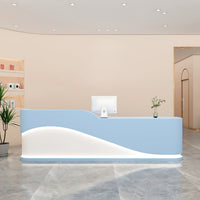
Curved Reception Desk 47-94 in Wide with Keyboard Tray, File Drawers & LED Lighting
Bookcase Storage Cabinet 71 in Tall for Home Office
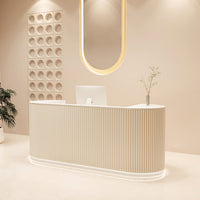
Curved Reception Desk 63-142 in Wide with Keyboard Tray, File Drawers & Fluted Front
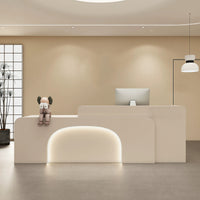
Curved Reception Desk 47-150 in Wide with LED Lighting, Keyboard Tray & File Drawers

Ergonomic Office Chair with Swivel, Curved & Dual-Tone for Home Office

Modern Executive Desk with Wireless Charging, Built-In Outlets & Side Storage

Modern Executive Desk 25-110 in Wide with Side Storage for Home Office
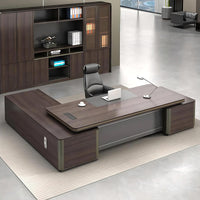
Modern Executive Desk 22-126 in Wide with Curved & Cable Management for Home Office
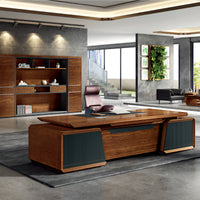
Modern Executive Desk 28-142 in Wide with Walnut for Home Office

Content Menu ● Understanding the Benefits of an L-Shaped Reception Desk >> What Makes L-Shaped Desks Popular? >> Space Efficiency and Layout Compatibility ● Key Factors to Consider When Choosing an L-Shaped Reception Desk...
Aug 07, 2025
Content Menu ● Understanding L-Shaped Reception Desks >> What is an L-Shaped Reception Desk? >> Benefits of L-Shaped Reception Desks ● Why Choose Kaguyasu for L-Shaped Reception Desks? >> Commitment to Quality and Design >> Wide...
Aug 06, 2025
Content Menu ● Why Choose an L-Shaped Reception Desk? >> Space-Efficient and Practical Layout >> Enhanced Interaction and Accessibility >> Stylish and Professional Appearance ● Key Features to Look for in an L-Shaped Reception Desk...
Aug 06, 2025