Select a checkout option below
Your cart is currently empty.
Continue shopping
 kaguyasu
Content Menu
● Understanding the Desk Designs
>> What is an L-shaped Executive Desk?
>> What is a U-shaped Desk?
● Space Utilization and Layout
>> L-shaped Desk Space Usage
>>> Benefits of Corner Placement
>> U-shaped Desk Space Usage
>>> The Impact of Surrounding Work Surfaces
● Functionality and Productivity
>> Productivity Boosts with L-shaped Desks
>>> Advantages for Task Management
>> U-shaped Desk Enhancements to Workflow
>>> Collaboration and Multitasking
● Aesthetic Considerations
>> L-shaped Executive Desk Design Variety
>>> Visual Appeal
>> U-shaped Desk Visual Impact
>>> Design and Style Impressions
● Storage and Organization
>> Storage Solutions with L-shaped Desks
>>> Organizational Benefits
>> Storage Capacity of U-shaped Desks
>>> Maximizing Efficiency
● Cost Comparison
>> L-shaped Desk Pricing and Affordability
>>> Additional Value Considerations
>> U-shaped Desk Investment
>>> Long-term Value
● Installation and Mobility
>> Simplicity of Installing L-shaped Desks
>>> Mobility Highlights
>> Installation Challenges of U-shaped Desks
>>> Considerations for Mobility
● Comfort and Ergonomics
>> Ergonomic Design of L-shaped Desks
>>> Comfort Features
>> U-shaped Desk Ergonomics
>>> Potential Drawbacks
● Final Thoughts: Which Desk Type is Right for You?
● Frequently Asked Questions
>> 1. Which desk type is better for a small office?
>> 2. Can U-shaped desks accommodate multiple users?
>> 3. How do these desks compare in terms of assembly?
>> 4. Are U-shaped desks more expensive than L-shaped ones?
>> 5. Which desk offers better ergonomics for long working hours?
When it comes to office furniture, especially desks designed for productivity and professionalism, two popular choices often come up: L-shaped executive desks and U-shaped desks. Both designs cater to different workspace needs, preferences, and environments. Choosing the right desk can significantly influence workflow efficiency, comfort, and the overall aesthetics of the office. This article explores the pros and cons of each desk type, providing detailed insights to help you make an informed decision.

Before diving into their respective advantages and disadvantages, it's important to understand what these desks are and how their shapes influence their functionality.
An L-shaped executive desk is designed in the shape of the letter "L". It usually comprises two rectangular surfaces joined at a right angle. This design offers ample workspace, commonly allowing a primary working area and a secondary side area used for storage or additional equipment.
A U-shaped desk consists of three connected work surfaces forming the shape of the letter "U". This type provides a more expansive workspace that surrounds the user on three sides. It creates an environment where the user can reach different areas of the desk without standing up or moving too much.
An L-shaped desk is ideal for corner spaces. Its design fits snugly in a corner, utilizing space efficiently without occupying the center of the room. This leaves the rest of the room open and uncluttered, which is especially advantageous in small to medium-sized offices.
- Maximizes the use of an otherwise unused corner.
- Frees up floor space for other furniture or movement.
- Natural orientation for multitasking with one side designated for computer work and the other for paperwork.
U-shaped desks require more floor space and are therefore better suited for larger offices where the desk can become a prominent centerpiece. The U-shape surrounds the user, allowing for different functions on each side—such as computer use on one side, meetings on another, and document handling on the third.
- Provides extensive space for organizing various office tasks.
- Encourages greater efficiency by having everything within arm's reach.
- Can accommodate multiple monitors, phones, and document piles without clutter.
L-shaped desks support a smooth workflow by creating two distinct zones, which can be customized according to the user's needs. This zoning helps organize work into manageable parts and reduces distractions.
- Clear division between digital and paper work.
- Easier to clean and organize due to fewer surfaces.
- Suitable for both solo work and minimal collaboration.
With more surface area, U-shaped desks promote an all-encompassing work environment. You can keep every essential item within arm's reach without clutter. This design can significantly reduce the time spent looking for files or equipment.
- Facilitates multitasking with multiple projects or responsibilities.
- Ideal for executives needing to hold meetings at their desks.
- Potential to add modesty panels or partitions for privacy when needed.
L-shaped desks come in diverse styles, materials, and finishes, ranging from modern minimalist designs to traditional wood finishes. Their versatile design suits many office aesthetics, from home offices to corporate environments.
- Sleek and modern look that fits well in contemporary setups.
- Can be complemented with matching storage units and ergonomic chairs.
- Focuses on simplicity without overwhelming the office space.
U-shaped desks often convey power and professionalism due to their imposing size and presence. They make a statement in executive offices, often associated with senior leadership and high-ranking officials.
- Creates a formal, authoritative office atmosphere.
- Can be customized with premium materials like rich wood veneers and metal accents.
- Requires careful coordination with room layout to avoid overwhelming the space.
Though offering less surface area than U-shaped desks, many L-shaped desks incorporate built-in drawers, filing cabinets, and overhead shelving to maximize storage without clutter.
- Enables separation of frequently used items from archived documents.
- Encourages tidy arrangement with designated storage spaces.
- Easier to maintain due to compact design.
U-shaped desks generally offer more built-in storage options including additional drawers, shelves, and even lockable cabinets. The extra workspace also accommodates desktop organizers and technological equipment.
- Ample space for sorting, categorizing, and storing office materials.
- Ideal for users who deal with extensive paperwork or equipment.
- Greater flexibility in layout and accessories usage.
Generally, L-shaped desks tend to be more affordable due to having fewer materials and simpler construction compared to U-shaped desks. They provide a cost-effective option for those needing functionality without overspending.
- Easier to move and install, reducing additional fees.
- Wide selection at various price points to fit different budgets.
- Lower maintenance and replacement costs.
U-shaped desks are often considered luxury office furniture due to their size, complexity, and material requirements. The higher cost is frequently justified by the desk's benefits in productivity and status symbolism.
- Can be viewed as a statement piece in an executive office.
- Durable materials and build quality offer longevity.
- Potential for increased professional presence impacting business relations.
L-shaped desks are easier to assemble and move because of their compact design. They can often fit through doorways and around tight corners with relative ease, making them practical for frequent relocations.
- Suitable for temporary or dynamic office layouts.
- Quicker to disassemble and reassemble when needed.
- Less effort required to adapt to changing office conditions.
Due to their size and three-part construction, U-shaped desks may require professional installation. Moving such desks can be complicated, necessitating careful planning and additional help.
- Not ideal for offices prone to reconfiguration.
- May require floor space clearance during setup.
- Assembly could take several hours depending on model complexity.
L-shaped desks offer ergonomic advantages by providing ample legroom and allowing users to shift focus between tasks without straining. The secondary surface can usually be positioned appropriately to support the dominant hand or preferred posture.
- Supports natural body posture and reduces repetitive strain.
- Allows for the integration of ergonomic accessories like keyboard trays and adjustable monitor stands.
- Facilitates easier interaction with visitors or assistants sitting on the side.
With the user surrounded on three sides, U-shaped desks create an immersive workspace. They can integrate advanced ergonomic designs including adjustable height segments, curve-contoured edges, and space for footrests.
- Risk of feeling enclosed or cramped if the desk is not properly sized.
- More complex ergonomic adjustments may be necessary.
- Extended reach on certain sides may cause slight discomfort over time if improperly arranged.
Choosing between an L-shaped executive desk and a U-shaped desk ultimately depends on workspace size, work habits, budget, and personal preference.
- If your office space is limited, you want a versatile yet unobtrusive desk, and your work involves transitioning between digital and paper tasks, the L-shaped desk is likely the better fit.
- If you have a large office, multitask heavily, need extensive storage, and want a commanding presence, a U-shaped desk will cater well to your needs.
Both desk types offer valuable benefits and have some trade-offs. Consider the pros and cons in relation to your daily work environment to make the most effective decision.

For small offices, the L-shaped desk is generally better. It fits well into corners and maximizes space without overcrowding the room.
While U-shaped desks are designed primarily for one user, their size and surface area can allow short collaborative sessions but are not ideal for sustained multiple-user work.
L-shaped desks tend to be easier and quicker to assemble, while U-shaped desks usually require more time and sometimes professional assistance due to their complexity.
Yes, U-shaped desks generally cost more because of their larger size, extra materials, and often premium designs.
Both can be ergonomic if designed well; however, the L-shaped desk might offer better comfort in smaller spaces, whereas the U-shaped desk provides more room for ergonomic accessories and adjustment options.
Hot Tags: China, Global, OEM, private label, manufacturers, factory, suppliers, manufacturing companya

Leather Executive Office Chair with Genuine Leather, Solid Wood & Lumbar Support

Mesh Ergonomic Office Chair with Breathable Mesh & Lumbar Support for Executive Office
Bookcase Storage Cabinet 71 in Tall for Home Office
Curved Reception Desk 47-94 in Wide with Keyboard Tray, File Drawers & LED Lighting
Curved Reception Desk 63-142 in Wide with Keyboard Tray, File Drawers & Fluted Front
Curved Reception Desk 47-150 in Wide with LED Lighting, Keyboard Tray & File Drawers

Ergonomic Office Chair with Swivel, Curved & Dual-Tone for Home Office

Modern Executive Desk 25-110 in Wide with Side Storage for Home Office

Modern Executive Desk with Wireless Charging, Built-In Outlets & Side Storage
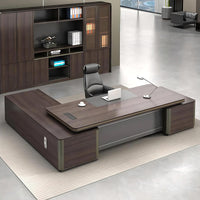
Modern Executive Desk 22-126 in Wide with Curved & Cable Management for Home Office
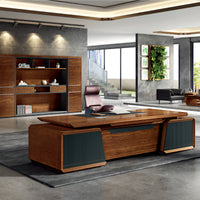
Modern Executive Desk 28-142 in Wide with Walnut for Home Office

Content Menu ● Benefits of L-Shaped Executive Desks >> Maximized Workspace for Multitasking >> Efficient Use of Office Corners >> Enhanced Ergonomics and Comfort >> Ample Storage Options >> Increased Productivity >> Stylish and Professional Appearance ● Design...
Aug 14, 2025
Content Menu ● The Design and Structure of L-shaped Executive Desks >> What Defines an L-shaped Executive Desk? >> Maximizing Workspace Efficiency ● Ergonomics and Comfort >> Enhanced Accessibility and Reach >> Optimal Posture Support ● Organizational...
Aug 14, 2025
Content Menu ● Understanding the Appeal of L-shaped Executive Desks >> What Makes an L-shaped Desk Ideal for Executives? >> Benefits Beyond Aesthetics and Space ● Key Considerations When Choosing Your L-shaped Executive Desk...
Aug 13, 2025