Select a checkout option below
Your cart is currently empty.
Continue shopping
 kaguyasu
Content Menu
● Why Choose a Curved Reception Desk?
● Key Considerations for Materials of Curved Reception Desks
● Best Materials for Durable Curved Reception Desks
>> 1. Wood and Wood-Based Materials
>>> Solid Wood
>>> Plywood
>>> Medium-Density Fiberboard (MDF)
>> 2. Laminates and High-Pressure Laminates (HPL)
>> 3. Natural Stone
>>> Granite and Marble
>>> Quartz
>> 4. Metals
>> 5. Eco-Friendly and Composite Materials
● Construction Techniques for Curved Reception Desks
>> Building the Frame
>> Surface Shaping
● Maintenance Tips for Curved Reception Desk Materials
● Matching Materials with Design Styles
● Related Questions and Answers
Reception desks serve as a focal point for welcoming visitors and setting the tone for a business environment. When choosing materials for a durable curved reception desk, it is essential to balance aesthetics, durability, and maintenance. Curved desks pose additional design challenges, so selecting materials that can bend or be shaped without losing strength or beauty is critical.

Curved reception desks provide a warm, inviting aesthetic and ergonomic advantages. They break the monotony of straight lines and can be designed to fit unique spaces, optimizing interaction between receptionists and visitors. However, their construction requires careful material selection to ensure longevity and functional appeal.
- Durability: High-traffic areas like reception need materials resistant to scratches, stains, and wear.
- Formability: Materials must be able to bend or be shaped into curves without cracking or warping.
- Maintenance: Easy cleaning and upkeep reduce long-term costs.
- Aesthetic Versatility: The ability to match or complement interior décor and brand identity.
- Environmental Impact: Increasingly, sustainable and eco-friendly options are preferred.
Solid wood lends a timeless, premium look and is extremely durable. Hardwoods like oak, walnut, and maple are commonly chosen. For curved sections, thin veneers or bent laminates of wood can be used to achieve smooth curves. Solid wood requires professional craftsmanship for bending and shaping and needs proper sealing for moisture protection.
Plywood is an engineered wood made of thin layers glued together, which offers both strength and flexibility. Its thin sheets (often 1/4 inch thick) make it ideal for the curved parts of a desk frame or top. Multiple layers can be laminated to increase thickness and rigidity. Plywood is lightweight, comparatively more affordable, and can accept various finishes.
MDF is less flexible than plywood but provides a smooth surface that can be easily painted or laminated. It serves well as a core material for curved forms when combined with veneers or laminates on the surface, though MDF needs protection from moisture.
Laminates consist of a resin-infused decorative layer bonded to a substrate like MDF or plywood. High-Pressure Laminate (HPL) offers a tough, wear-resistant surface ideal for heavy-use reception desks. Laminates can easily be applied to curved shapes using heat and adhesive, providing a cost-effective way to achieve aesthetic variety — wood grain, stone looks, bold colors, or textures. They clean easily and resist stains and scratches, making them practical and durable for curved desks.
Natural stones such as granite and marble bring a sense of luxury and solidity. They are naturally durable, scratch-resistant, and visually striking with unique patterns and colors. While traditionally less flexible, modern fabrication techniques allow stone slabs to be shaped into curves or rounded edges. Stone surfaces are best used as desktop tops rather than full desk surfaces, complemented by sturdier core materials for support.
Engineered quartz is a composite of natural quartz and resins, offering enhanced durability and stain resistance without the fragility sometimes seen in marble. Quartz can be fabricated into rounded and curved shapes with fewer risks of cracking, making it another excellent choice for durable and attractive curved reception desks.
Pressed metals like aluminum, copper, and zinc bring a clean, industrial aesthetic to reception desks. Metals provide structural strength and can be used as cladding or structural elements beneath other surfaces. Aluminum, in particular, is lightweight and corrosion-resistant and can be formed into curved shapes relatively easily. Metals are often used in combination with wood or stone for contrast and durability.
Sustainable materials are increasingly popular in modern corporate environments. Options include:
- Bamboo: A fast-growing, renewable wood alternative with excellent strength.
- Recycled Metals: Steel or aluminum recycled content reduces environmental impact.
- Eco-Friendly Composites: Materials combining recycled plastics and natural fibers offer lightweight, scratch-resistant surfaces that can be molded into curves.
These materials support green building principles without sacrificing design or durability.
The desk's frame must provide stable support for the curved surfaces. Thin plywood or bending plywood ("wiggle board") is often used to create the curved form. Vertical supports and cross beams ensure rigidity and weight support.
- Bending Plywood: Thin sheets are glued and nailed over the curved frame.
- Kerf Cutting: Slicing thin cuts on the backside of thicker wood to enable bending.
- Steam Bending: Using steam to make wood pliable for shaping.
- Bent Lamination: Gluing multiple thin wood strips along a curved form.
After shaping, finishes such as laminate, veneer, or paint are applied for protection and aesthetics.
- Wood: Regular cleaning with a damp cloth; periodic sealing or polishing.
- Laminates: Wipe with mild detergents; avoid abrasive cleaners.
- Stone: Clean spills promptly; use appropriate stone cleaner; reseal periodically if required.
- Metals: Use non-abrasive metal cleaners; polish as necessary.
- Composites: Clean with mild soap; avoid harsh chemicals.
- Modern/Industrial: Metals, laminates with bold colors, and engineered quartz.
- Traditional/Elegant: Solid wood, marble, granite.
- Eco-Friendly/Contemporary: Bamboo, recycled metals, composites.
Combining materials (e.g., wood with metal accents, stone tops with wooden bases) can create striking, durable curved reception desks aligned with a brand's identity.
Q1: What is the most durable material for a curved reception desk?
A1: Solid hardwood and engineered quartz are among the most durable, provided they are properly finished and maintained.
Q2: Can natural stone be bent to form curved reception desks?
A2: Natural stone slabs can be fabricated with curved edges and shapes but are usually used as desktop surfaces supported by flexible materials underneath.
Q3: Are laminates suitable for curved desks?
A3: Yes, laminates, especially high-pressure laminate (HPL), are highly suitable for curved surfaces due to their flexibility, durability, and wide design options.
Q4: How does plywood compare to MDF for curved desks?
A4: Plywood is more flexible and stronger for curved shapes, while MDF offers a smooth surface but is less bendable and can be damaged by moisture.
Q5: What are eco-friendly options for reception desk materials?
A5: Bamboo, recycled metals, and composite materials made from recycled plastics and natural fibers provide durable and environmentally responsible choices.

[1] https://www.brooklynmillwork.com/posts/6-types-of-materials-used-for-custom-reception-desks
[2] https://patents.google.com/patent/CN204990766U/zh
[3] https://archicfurniture.com/blogs/furniture/organic-reception-desk
[4] https://patents.google.com/patent/CN214253560U/zh
[5] https://kaguyasu.com/blogs/blog/how-to-make-a-curved-reception-desk-that-wows
[6] https://blog.csdn.net/weixin_45386937/article/details/113763997
[7] https://www.formica.com/en-gb/articles/trends/the-perfect-surface-material-for-your-reception-desk
[8] https://patents.google.com/patent/CN206443349U/zh
[9] https://www.clarkerendall.com/post/reception-desk-materials-and-finishes
[10] https://www.cnblogs.com/mqcan/articles/1214135.html
Hot Tags: China, Global, OEM, private label, manufacturers, factory, suppliers, manufacturing company

Leather Executive Office Chair with Genuine Leather, Solid Wood & Lumbar Support

Mesh Ergonomic Office Chair with Breathable Mesh & Lumbar Support for Executive Office
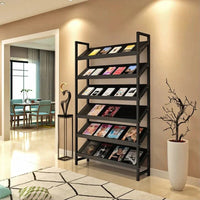
Bookcase Storage Cabinet 71 in Tall for Home Office
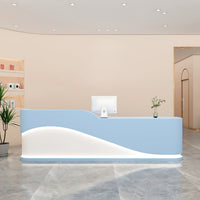
Curved Reception Desk 47-94 in Wide with Keyboard Tray, File Drawers & LED Lighting
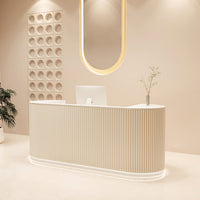
Curved Reception Desk 63-142 in Wide with Keyboard Tray, File Drawers & Fluted Front
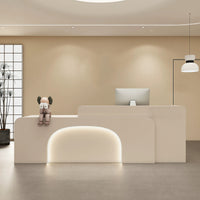
Curved Reception Desk 47-150 in Wide with LED Lighting, Keyboard Tray & File Drawers

Ergonomic Office Chair with Swivel, Curved & Dual-Tone for Home Office

Modern Executive Desk with Wireless Charging, Built-In Outlets & Side Storage

Modern Executive Desk 25-110 in Wide with Side Storage for Home Office
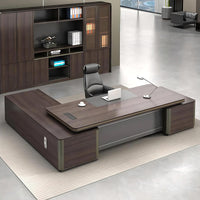
Modern Executive Desk 22-126 in Wide with Curved & Cable Management for Home Office
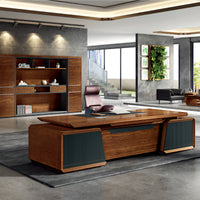
Modern Executive Desk 28-142 in Wide with Walnut for Home Office

Content Menu ● Understanding the Importance of a Reception Desk in Office Design >> Role of the Reception Desk >> Why Choose a Curved Reception Desk? ● Key Factors to Consider When Choosing a...
Aug 11, 2025
Content Menu ● Introduction ● Why Choose Curved Reception Desks? ● Top Trends in Curved Reception Desk Design for 2025 >> Sleek and Minimalist Designs >> Use of Innovative and Sustainable Materials >> Integration of Technology...
Aug 10, 2025
Content Menu ● Understanding Reception Desk Roles and Importance ● Aesthetic Appeal and Style >> Curved Reception Desks: Modern & Inviting >> Traditional Straight Desks: Classic & Functional ● Functional Benefits and Ergonomics >> Curved Desks:...
Aug 10, 2025