
My office
Your cart (0)
Your cart is ready for a fresh start.
Explore office furniture designed for focused, comfortable work.
Continue shoppingMy office
Explore office furniture designed for focused, comfortable work.
Continue shoppingContent Menu
● Understanding Conference Table Legs and Attachments
>> Types of Conference Table Legs
>> Common Attachment Hardware
● Tools and Materials Needed
● Step-by-Step Guide to Attaching Legs to a Conference Table
>> Step 1: Prepare the Tabletop
>> Step 2: Install Attachment Hardware
>>> Using Hanger Bolts and T-Nuts
>>> Using Threaded Inserts and Bolts
>>> Using Wood Screws
>> Step 3: Attach the Legs
>> Step 4: Final Checks and Adjustments
● Tips for a Professional Finish
● Maintenance and Safety Considerations
● Frequently Asked Questions
Attaching legs to a conference table is a fundamental step in furniture assembly that ensures stability, durability, and aesthetic appeal. Whether you are assembling a new conference table or replacing legs on an existing one, understanding the correct methods and tools is essential. This comprehensive guide will walk you through the process of attaching legs to a conference table, covering various types of legs, attachment hardware, and practical tips for a secure and professional finish.

Before diving into the attachment process, it is important to understand the types of legs commonly used for conference tables and the hardware options available for securing them.
Conference tables come with different leg styles depending on design and function:
- Wooden Legs: Classic and sturdy, often used for traditional conference tables.
- Metal Legs: Provide a modern look and are usually stronger and more durable.
- Adjustable Legs: Height-adjustable legs allow customization for ergonomic comfort.
- Pedestal Legs: Central support legs often used for larger tables to maximize legroom.
The choice of hardware affects the ease and strength of leg attachment. The most common hardware types include:
- Hanger Bolts and T-Nuts: Hanger bolts screw into the wood, and T-nuts are inserted into the underside of the tabletop to anchor the bolts securely. This method prevents spinning and provides strong support.
- Threaded Inserts and Bolts: Threaded inserts create a metal thread inside the wood, allowing bolts to screw in firmly. This is ideal for metal legs attached to wooden tops.
- Wood Screws: The simplest method, where screws attach legs directly to the wood. Pan-head screws are preferred to avoid splitting the wood.
- Mounting Plates and L-Brackets: Metal plates or brackets can be screwed into both the table and the leg for added stability.
Before starting, gather the following tools and materials:
- Drill with appropriate drill bits
- Screwdriver or power driver
- Measuring tape
- Pencil or marker
- Level
- Screws, bolts, hanger bolts, T-nuts, or threaded inserts (depending on chosen method)
- Table legs
- Protective gloves and safety glasses
- Measure and Mark: Use a measuring tape to locate the exact points where the legs will be attached. Typically, legs are placed about 2-3 inches in from each corner to ensure stability.
- Mark Drill Points: Mark the screw holes on the underside of the tabletop and on the legs if pre-drilled holes are not present.
Depending on the hardware method chosen, install the necessary components:
- Drill holes in the tabletop for T-nuts.
- Insert T-nuts into the holes from the underside.
- Screw hanger bolts into the legs.
- Align hanger bolts with T-nuts and screw legs onto the tabletop.
- Drill holes in the tabletop to fit threaded inserts.
- Insert threaded inserts into the holes, ensuring they are flush with the surface.
- Align legs and screw bolts through the legs into the threaded inserts.
- Align legs with marked points.
- Pre-drill holes to prevent wood splitting.
- Screw legs directly into the tabletop using pan-head screws.
- Position each leg at the marked location.
- Secure the legs using the chosen hardware.
- Use a level to ensure legs are straight and the table will be stable.
- Tighten all screws and bolts securely.
- Check for wobbling or unevenness.
- Adjust leg positions or tighten hardware as needed.
- If legs are adjustable, set the desired height.
- Pre-drill holes: Always pre-drill screw holes to avoid splitting the wood.
- Use the right screws: Pan-head screws are less likely to damage wood compared to pointed-head screws.
- Check leg alignment: Use a level frequently during assembly.
- Consider leg design: Some legs come with gravity-locking mechanisms that simplify attachment without screws.
- Protect surfaces: Place a soft cloth under the table during assembly to prevent scratches.
- Periodically check and tighten screws and bolts to maintain stability.
- Avoid over-tightening, which can strip screw holes.
- Use protective pads under legs if the table is on delicate flooring.
- When removing legs, do so carefully to avoid damage to the tabletop or legs.
Q1: What is the strongest method to attach legs to a conference table?
A1: Using threaded inserts combined with bolts offers a strong and durable connection, especially for metal legs attached to wooden tabletops.
Q2: Can I attach legs to a conference table without pre-drilled holes?
A2: Yes, but you should carefully measure and pre-drill holes yourself to ensure proper alignment and prevent wood splitting.
Q3: Are adjustable legs harder to install than fixed legs?
A3: Adjustable legs may require additional steps for height calibration but generally attach using the same hardware methods as fixed legs.
Q4: How do I prevent the table legs from wobbling after installation?
A4: Ensure all screws or bolts are tightened evenly and check leg alignment with a level. Using mounting plates or L-brackets can also enhance stability.
Q5: Can I replace metal legs with wooden legs on my conference table?
A5: Yes, but ensure the attachment hardware is compatible with the new legs and the tabletop to maintain stability and safety.

[1] https://www.corpdesign.com/cd-4848cte-n
[2] https://www.upliftdesk.com/height-adjustable-conference-table/
[3] https://www.pcfdistributors.com/sigbs4236nmwnmwnblkmwn
[4] https://www.storliecompany.com/conferencetablessignaturewood
[5] https://www.architonic.com/en/p/attach-or-conference-table-1411425/
[6] https://www.gemu.cn/static/uploads/editor/files/20200511/1589177189554633.pdf
[7] https://www.alibaba.com/showroom/table-leg-attachment.html
[8] https://discovery.ucl.ac.uk/id/eprint/10151951/1/The-Global-Smartphone-Chinese.pdf
Hot Tags: China, Global, OEM, private label, manufacturers, factory, suppliers, manufacturing company

Leather Executive Office Chair with Genuine Leather, Solid Wood & Lumbar Support

Mesh Ergonomic Office Chair with Breathable Mesh & Lumbar Support for Executive Office
Wooden Floor Standing Magazine Rack with Angled Shelves
Curved Reception Desk 47-94 in Wide with Keyboard Tray, File Drawers & LED Lighting
Curved Reception Desk 63-142 in Wide with Keyboard Tray, File Drawers & Fluted Front
Curved Reception Desk 47-150 in Wide with LED Lighting, Keyboard Tray & File Drawers

Ergonomic Office Chair with Swivel, Curved & Dual-Tone for Home Office

Modern Executive Desk 25-110 in Wide with Side Storage for Home Office
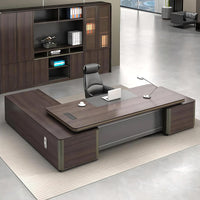
Modern Executive Desk 22-126 in Wide with Curved & Cable Management for Home Office
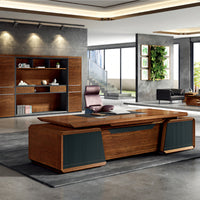
Modern Executive Desk 28-142 in Wide with Walnut for Home Office

Content Menu ● What Is the Standard Height of a Conference Table? >> H2: Typical Conference Table Height >> H3: Variations in Height ● How Tall Is Conference Table Relative to Other Tables? ● Conference...
Jun 23, 2025
Content Menu ● Introduction ● What Makes the Best Executive Desk Chair? >> H2: Key Features of the Best Executive Desk Chair >> H3: Ergonomics and Comfort ● Types of Best Executive Desk Chairs >> H2:...
Jun 22, 2025
Content Menu ● Introduction to Adjustable Height Executive Desk ● What is an Adjustable Height Executive Desk? >> Definition and Key Features ● Benefits of Using an Adjustable Height Executive Desk >> Enhanced Ergonomics and...
Jun 22, 2025