
Select a checkout option below
Your cart is currently empty.
Continue shopping
Your office is more than just a place where employees clock in and out; it is a three-dimensional manifestation of your corporate identity. In the modern business landscape, where digital interactions often dominate, the physical environment serves as a critical "touchpoint" that provides a tangible anchor for your brand’s values. While logos and websites provide a digital handshake, the physical environment delivers the firm grip of reality.
The furniture you choose acts as a silent ambassador. It communicates hierarchy, culture, innovation, and stability before a single word is exchanged during a pitch or an interview. Understanding the profound psychological impact of furniture design is no longer a luxury for interior designers—it is a strategic imperative for brand managers and CEOs alike.
The visual style of your furniture sets the immediate tone for client expectations. When a visitor walks into your lobby, their subconscious mind begins categorizing your brand based on the textures, shapes, and materials they encounter.
Minimalist & Sleek: The Innovation Narrative
Glass, polished steel, and clean, geometric lines signal a brand that is forward-thinking, transparent, and efficient. This is the hallmark of tech innovators and modern creative agencies. Minimalist furniture suggests a lack of "clutter"—both physical and mental—implying that the company is agile and focused on the future.
Classic & Substantial: The Heritage Narrative
Conversely, rich hardwoods like walnut or oak, paired with heavy leather upholstery, evoke stability, tradition, and prestige. These elements are often utilized by established law firms and private equity institutions. The "heaviness" of the furniture translates to a sense of long-term trust; it suggests the company has deep roots and isn't going anywhere.
The way furniture is arranged speaks volumes about your internal "operating system." Spatial design is the physical manifestation of your corporate hierarchy and social contract.
The Rise of the Open-Plan and Modular System
Using benching systems and low-profile partitions suggests a flat hierarchy and a culture of radical collaboration. It tells visitors—and potential recruits—that your brand values the collective over the individual. It screams "transparency." However, the brand risk here is the perception of "chaos." To counter this, high-end brands often integrate acoustic "pods" or modular phone booths, signaling that while they value teamwork, they also respect the need for focus and professional privacy.
The Executive Suite and High-Stakes Comfort
In sectors where specialized expertise is the primary product, the presence of ergonomic lounges and high-end private suites reflects a brand that values deep work and employee well-being. By providing furniture that prioritizes the physical comfort of the worker, a brand communicates that it views its staff as its most valuable assets, rather than mere cogs in a machine.
In the modern market, "green" is a brand requirement, not a bonus. Modern consumers and B2B partners are increasingly scrutinizing the supply chains of the companies they associate with.
Furnishing an office with upcycled materials, reclaimed wood, or pieces from certified sustainable manufacturers (such as those with BREEAM or LEED ratings) signals ethical responsibility. It shows that your brand is conscious of its legacy and global footprint. When a client sits at a table made from recycled ocean plastic or sustainably harvested timber, the brand is making a silent pledge: "We care about the future as much as we care about our bottom line." This builds a layer of "moral capital" that is incredibly difficult to achieve through traditional advertising.
Furniture shouldn't just match the carpet; it should align with your brand’s emotional palette. The psychology of color in furniture design can subtly manipulate the "vibe" of a workspace.
A brand’s perception is also shaped by the quality and functionality of the furniture. If a client sits in a chair that creaks or uses a conference table with broken wire-management flaps, the brand perception shifts toward "neglectful" or "struggling."
High-quality, intuitive furniture—tables with seamless integrated technology, chairs with effortless adjustments—suggests a brand that pays attention to detail. It implies that if the company puts this much thought into their chairs, they will put even more thought into the services they provide to their clients. Perfection in the environment suggests perfection in the output.
Brand perception isn't just for clients; it's for the internal team. Top-tier talent today views the office as a "lifestyle choice." A workspace filled with generic, uninspired cubicles signals a brand that is stagnant. Conversely, a thoughtfully designed space with a mix of "third spaces" (café-style seating, library zones, and standing desks) signals a brand that is dynamic and respects autonomy.
When employees feel that their environment is a "premium" experience, they carry themselves with a higher level of professional pride. This "internal branding" eventually leaks out into the world through every client interaction and LinkedIn post, reinforcing the external brand perception.
Investments in office furniture are often viewed through the narrow lens of utility or capital expenditure. However, their true Return on Investment (ROI) lies in perception management.
In a world where products and services are increasingly commoditized, the "experience" of a brand becomes the primary differentiator. When your physical space—the textures, the layout, and the comfort—aligns perfectly with your brand’s promise, it creates a cohesive, frictionless experience. This consistency is the foundation of trust.
Whether you are a scrappy tech startup or a century-old financial institution, your furniture is telling a story. The question is: Is it the story you want your audience to hear? By choosing furniture that reflects your core values, you ensure that your brand speaks clearly, even when the room is silent.
To translate your brand identity into a physical space, explore our collection of reception desks, conference tables, executive desks, and office sofas—designed to help you create a cohesive and lasting impression.
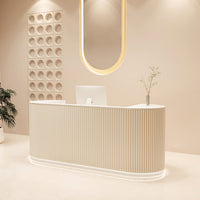
Curved Reception Desk 63-142 in Wide with Keyboard Tray, File Drawers & Fluted Front

Premium Dual-Tone Rectangular Conference Table with Cable Management

Modern Reception Desk 31 in Wide for Office Lobby