
My office
Your cart (0)
Your cart is ready for a fresh start.
Explore office furniture designed for focused, comfortable work.
Continue shoppingMy office
Explore office furniture designed for focused, comfortable work.
Continue shoppingContent Menu
>> Understanding Your Space
>> Determining Seating Capacity
● Factors Influencing Conference Table Size
>> Room Dimensions and Layout
>> Intended Use of the Table
>> Space Allocation per Person
● Standard Conference Table Sizes
● Choosing the Right Shape
● Additional Considerations
>> Audio/Visual Equipment
>> Future Needs
● Conclusion
>> Frequently Asked Questions
>> Citations:
Choosing the right size of a conference table is crucial for ensuring that your meetings are productive and comfortable for all participants. The size of the table should be proportional to the number of people it will accommodate and the dimensions of the room where it will be placed. In this article, we will explore the factors that influence the choice of a conference table size and provide guidance on how to select the perfect table for your needs.

Before deciding on the size of your conference table, it's essential to understand the dimensions of your meeting room. Measure the length and width of the room, taking into account any obstructions such as columns or other furniture. This will give you the free space available for the table. Ideally, the room should be at least 1.8 meters wider and longer than the table to ensure easy movement around it. However, for more comfort, it's recommended that the room be about 2.4 meters wider and longer.
The number of people you plan to seat at the table is a key factor in determining its size. Generally, a small conference table suitable for 4 to 6 people should be around 4 to 6 feet long and 3 to 4 feet wide. For medium-sized groups of 6 to 10 people, a table measuring 6 to 8 feet long and 4 to 5 feet wide is appropriate. Larger groups of 10 to 14 people require a table that is 8 to 10 feet long and 4 to 6 feet wide. For very large groups of 14 or more, tables can range from 10 to 20 feet in length and 6 to 8 feet in width.
The layout of the room, including the location of doors, windows, and any permanent obstructions, plays a significant role in determining the table size. Ensure there is enough clearance around the table for comfortable movement. A minimum of 40 inches (about 100 cm) of space between the edge of the table and the wall is recommended, but more space is preferable if possible.
The purpose of the conference table also affects its size. If the room will be used for presentations, you may need a larger table to accommodate a projector and screen. For collaborative meetings, a smaller table might suffice, but ensure there is enough space for laptops and documents.
The amount of space allocated per person is crucial for comfort. A general rule of thumb is to provide at least 30 inches (about 76 cm) of table space per person. However, if participants will frequently use laptops or documents, consider providing more space, ideally around 42 inches (about 106 cm) per person.
Here are some standard sizes for conference tables based on the number of participants:
- Small Conference Tables (4-6 people): Length: 4 to 6 feet, Width: 3 to 4 feet
- Medium Conference Tables (6-10 people): Length: 6 to 8 feet, Width: 4 to 5 feet
- Large Conference Tables (10-14 people): Length: 8 to 10 feet, Width: 4 to 6 feet
- Extra Large Conference Tables (14+ people): Length: 10 to 20 feet, Width: 6 to 8 feet
The shape of the conference table can also impact its effectiveness. Rectangular tables are efficient for maximizing seating, while round tables promote inclusivity and natural eye contact. U-shaped tables can enhance interaction between participants at opposite ends and are suitable for presentations.
If your conference room will include audio/visual equipment, ensure that the table design accommodates this. Consider the distances required for projectors and screens, and ensure proper viewing angles.
As your organization grows, your conference room requirements may change. Consider potential future needs when selecting a table size to ensure it remains suitable in the long term.
Choosing the right conference table size involves considering several factors, including room dimensions, seating capacity, intended use, and future needs. By carefully evaluating these elements, you can select a table that fosters productive discussions and creates a comfortable environment for all participants.

1. What is the standard height of a conference table?
- The standard height of a conference table is typically around 30 inches (about 76 cm), providing a comfortable level for people to sit and rest their arms.
2. How much space should I allow between the table and the wall?
- It is recommended to allow at least 40 inches (about 100 cm) of space between the edge of the table and the wall for easy movement.
3. What shape of conference table promotes inclusivity?
- Round tables promote inclusivity and natural eye contact among participants.
4. How much table space should I allocate per person?
- A minimum of 30 inches (about 76 cm) of table space per person is recommended, but consider providing more space if participants will use laptops or documents.
5. What factors should I consider when choosing a conference table size?
- Key factors include the number of participants, room dimensions, intended use of the table, and future needs of your organization.
[1] https://workspace.ae/content/meeting-table-size-guide
[2] https://www.yealink.com/en/onepage/optimal-conference-table-dimensions-for-different-meeting-room-sizes
[3] https://loopfurniture.co.uk/blogs/news/size-it-right-expert-tips-in-our-conference-table-buying-guide
[4] https://wanbest.com/choosing-perfect-conference-tables-dimensions-a-simple-guide/
[5] https://www.stonelinedesigns.com/conference-table-size-guide/
[6] https://www.dious-furniture.com/Spaces_detail/conference-table-size-matters.html
[7] https://www.custom-conference-tables.com/about-tables/size-seating-guide/room-size/
[8] https://maxiwoods.com/choosing-the-right-size-for-your-conference-table/
[9] https://offispace.sa/blog/knowledge-center/conference-table-sizes/
[10] https://neat.no/resources/choosing-the-right-conference-table-size-for-a-meeting-room/
[11] https://www.ambiencedore.com/conference-room-planning-guide/
[12] https://madisonliquidators.com/conference-table-dimensions
[13] https://www.parkmanwoodworks.com/blogs/news/choosing-the-right-conference-room-table-size
[14] https://friskadesk.com/blogs/healthy-working/what-size-conference-table-do-i-need-buying-guide
[15] https://ofwgo.com/choosing-the-right-size-conference-table/

Modern Executive Desk 25-110 in Wide with Side Storage for Home Office

Executive Office Desk with Built-In Power and Storage
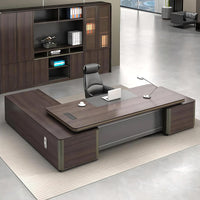
Modern Executive Desk 22-126 in Wide with Curved & Cable Management for Home Office
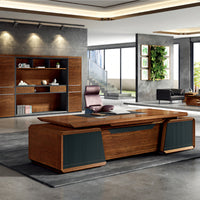
Modern Executive Desk 28-142 in Wide with Walnut for Home Office

Solid Wood Oval Conference Table with Cable Management

71-118 in Modern Executive Desk with Side Storage for Home and Office

Office Workstation Desk with Built-In Outlets, Cable Management & File Drawers

18-142 in Solid Wood Conference Table for Meeting Room

Content Menu >> Introduction to Modular Conference Tables ● Benefits of Modular Conference Tables >> Flexibility and Adaptability >> Cost-Effectiveness >> Ergonomic Design >> Environmental Sustainability ● Designing Modular Conference Tables >> Assessing Space and Size Requirements >> Considering...
Mar 06, 2025
Content Menu ● Introduction to Oval Conference Tables ● Why Choose Oval Conference Tables? ● Design and Customization of Oval Conference Tables ● Materials and Finishes ● Size and Capacity ● Integration of Technology ● Benefits of...
Mar 06, 2025
Content Menu ● Introduction to Rectangular Conference Tables ● Design Considerations for Rectangular Conference Tables ● Customization Options for Rectangular Conference Tables ● Benefits of Rectangular Conference Tables in Meeting...
Mar 06, 2025