
My office
Your cart (0)
Your cart is ready for a fresh start.
Explore office furniture designed for focused, comfortable work.
Continue shoppingMy office
Explore office furniture designed for focused, comfortable work.
Continue shoppingContent Menu
● Table of Contents
● Introduction
● Understanding Cashier Counter Types
>> What Are Custom Cashier Counters?
>> What Are Pre-Made Cashier Counters?
● The Pros and Cons of Custom Cashier Counters
>> Pros of Custom Cashier Counters
>>> 1. Tailored Fit and Functionality
>>> 2. Enhanced Branding
>>> 3. Superior Workflow Efficiency
>>> 4. Premium Materials and Durability
>>> 5. Future-Proofing and Flexibility
>> Cons of Custom Cashier Counters
>>> 1. Higher Upfront Cost
>>> 2. Longer Lead Times
>>> 3. Requires Close Collaboration
>>> 4. Complicated Repairs and Replacement
● The Pros and Cons of Pre-Made Cashier Counters
>> Pros of Pre-Made Cashier Counters
>>> 1. Cost Efficiency
>>> 2. Quick Availability
>>> 3. Simplicity
>>> 4. Predictable Quality
>> Cons of Pre-Made Cashier Counters
>>> 1. Limited Size and Design Options
>>> 2. Generic Look
>>> 3. Lower Long-Term Value
>>> 4. Minimal Technology Integration
● Detailed Comparison: Custom vs Pre-Made
● How to Decide: Key Factors to Consider
>> Budgeting and Cost
>> Space and Layout
>> Branding and Store Identity
>> Durability and Maintenance
>> Technology and Integration
● Frequently Asked Questions (FAQs)
Selecting between custom and pre-made cashier counters is a crucial decision for any retail business. The point of sale is not only where transactions happen—it's a focal point for customer experience, workflow efficiency, branding, and operational costs. In this comprehensive guide, we'll explore the detailed pros and cons of both custom and pre-made cashier counters so you can make an informed choice for your store.

- Introduction
- Understanding Cashier Counter Types
- What Are Custom Cashier Counters?
- What Are Pre-Made Cashier Counters?
- The Pros and Cons of Custom Cashier Counters
- Pros of Custom Cashier Counters
- Cons of Custom Cashier Counters
- The Pros and Cons of Pre-Made Cashier Counters
- Pros of Pre-Made Cashier Counters
- Cons of Pre-Made Cashier Counters
- Detailed Comparison: Custom vs Pre-Made
- How to Decide: Key Factors to Consider
- Budgeting and Cost
- Space and Layout
- Branding and Store Identity
- Durability and Maintenance
- Technology and Integration
- Frequently Asked Questions (FAQs)
- Word Count and Summary
A cashier counter is far more than a transaction desk—it shapes first impressions, impacts workflow, and can even influence your bottom line. Whether you're launching a new retail store, remodeling, or seeking ways to future-proof your operations, the right counter makes a significant difference. The main choice boils down to custom (bespoke, made-to-order for your needs) versus pre-made (ready-built, standardized solutions) counters.
Custom cashier counters are designed and fabricated to your store's unique requirements. They typically involve a collaborative process with designers and craftspeople who tailor everything—from dimensions and materials to technology integration and ergonomic specifications—to match your specific operational workflow and brand identity.
Pre-made counters, also known as stock counters, come in fixed designs, dimensions, and materials. Manufactured in batches, they are available for immediate purchase. They generally offer less flexibility but are quicker and sometimes more cost-effective to deploy.
A custom counter is measured and constructed to fit your available space perfectly. This maximizes the use of odd corners, unique floor plans, or specialized workflows, reducing wasted space and avoiding awkward configurations. Everything—from the placement of cash drawers to shelves, bagging areas, and cable management—can be optimized for your needs.
Custom counters offer the ability to incorporate your store's colors, logo, and signature style. This enhances brand recognition and makes the checkout experience feel unique, helping your store stand out from competitors.
You can design the flow around your specific transaction volume, staffing, and products. Factors such as counter height, bagging area placement, barriers, customer-facing displays, and POS technology integration can be specified for faster, smoother operations—benefiting both customers and staff.
Custom counters are often built with higher quality, more durable materials. This not only increases the lifespan of the fixture but also reduces ongoing maintenance and replacement costs.
Anticipate future growth? Need to add technology like self-checkout modules or accommodate accessibility requirements? Custom counters can be designed with expansion and adaptability in mind, supporting your business as it evolves.
Custom counters typically involve a substantially higher initial investment than ready-made options. Costs include design, materials, bespoke construction, and sometimes installation fees.
Designing and building takes time—often several weeks to months, depending on complexity. This may delay your store's opening or remodeling schedule.
Custom projects involve coordination with designers, contractors, and vendors. Decision fatigue and communication challenges can arise, especially if specifications are unclear.
Because the counter is unique, replacement parts or repairs may require custom fabrication, resulting in additional cost and lead time.
Pre-made counters are mass-produced, making them less expensive upfront compared to custom solutions. They're ideal for tight budgets or temporary setups.
Available off-the-shelf, these counters can be delivered and installed in days rather than weeks. This minimizes disruption and accelerates opening timelines.
Pre-made options are straightforward. You choose from existing models, minimizing decision-making stress and design complexity.
Manufactured under consistent standards, most pre-made counters offer predictable performance, basic durability, and simple maintenance requirements.
Space doesn't quite fit? Out-of-the-box counters offer little flexibility in size, layout, or features. Fitting a pre-made counter into a unique floor plan often results in wasted space or awkward positioning.
Pre-made counters lack opportunities for logo placement, custom colors, or personalized branding. They may look similar to those found in countless other retail outlets.
While cheaper upfront, pre-made counters often use lower-grade materials for cost efficiency. This can translate to shorter lifespans, more frequent repairs, and higher costs in the long run.
These counters may be unable to accommodate modern POS systems, self-checkouts, or other tech upgrades without costly modifications.
| Feature/Factor | Custom Cashier Counter | Pre-Made Cashier Counter |
|---|---|---|
| Fit with Store Layout | Exact, tailored fit and workflow | Generic, may not fit all spaces well |
| Branding Opportunities | Full integration (colors, logo, signage) | Limited; basic appearance |
| Upfront Cost | Higher | Lower |
| Time to Install | Weeks to months | Days to a week |
| Durability/Materials | Premium, built to last | Standard, variable quality |
| Technology Integration | Fully customizable (wires, screens, kiosks) | Limited, not always adaptable |
| Maintenance/Expansion | Custom, sometimes harder or costlier | Standard parts, easy to swap |
| Workflow Optimization | Exact match for your staffing and products | May require staff adaptation |
| Accessibility Options | ADA and unique requirements can be built in | Limited options, often basic compliance |
| Long-Term ROI | High with longevity and branding impact | Lower, especially if replaced often |
- If your budget is tight, pre-made counters offer an affordable entry point.
- If you seek long-term returns and reduced maintenance, custom counters become more cost-effective over time.
- Odd-shaped spaces, high customer flows, or the need for multiple checkout lanes? Go custom.
- Standard rectangular or modular spaces with average needs? Pre-made may suffice.
- Want to leave a memorable impression and strengthen brand identity? A custom counter is almost essential.
- For high-traffic stores, the robust materials used in custom designs pay off in the long term.
- For light-traffic, short-term, or pop-up stores, pre-made solutions are adequate.
- Need advanced POS, self-checkouts, integrated displays, or special storage? Custom counters excel.
- If your technology needs are basic, pre-made can meet them with minor adjustments.
Q1: Are custom counters always more expensive than pre-made ones?
A: Generally, yes. Custom counters require individualized design, labor, and often use premium materials. Although initial costs are higher, their durability, efficiency, and branding advantages may offer greater long-term value.
Q2: Can a pre-made cashier counter be customized later if my needs change?
A: To a limited extent. Pre-made counters may allow for minor adjustments (e.g., signage, fixtures), but major modifications (changing dimensions, rebuilding for new tech) are usually impractical or costly.
Q3: What is the typical lifespan difference between custom and pre-made counters?
A: Custom counters, if made with quality materials, often last significantly longer—sometimes twice as long as stock versions, especially in high-traffic scenarios.
Q4: Is it possible to blend custom and pre-made counters in the same store?
A: Absolutely. Many retailers use pre-made counters for low-volume or temporary checkout stations, and invest in a signature custom counter for main checkout points to maximize both efficiency and branding.
Q5: How do I choose the right cashier counter for my business?
A: Start by assessing your budget, store layout, volume of traffic, desired customer experience, branding needs, and technology requirements. Consulting with a retail design expert or vendor can clarify your options.

[1] https://kaguyasu.com/blogs/blog/the-ultimate-guide-to-cashier-counter-dimensions-design-functionality-and-customization
[2] https://www.holbrookgranite.com/pros-and-cons-of-prefab-countertops/
[3] https://displayarama.com/all-retail-stores/how-custom-checkout-counters-can-benefit-your-store/
[4] https://knowledgehero.de/en/blog/die-vor-und-nachteile-von-selfcheckout-kassen-in-supermaerkten
[5] https://sprintingretail.com/blog/retail-self-checkout-systems/
[6] https://kaguyasu.com/blogs/blog/the-evolution-of-cashier-counters-from-traditional-to-modern-designs
[7] https://kaguyasu.com/blogs/blog/how-to-choose-the-right-cashier-counter-for-your-business
[8] https://www.forbes.com/home-improvement/kitchen/types-of-kitchen-countertops/
[9] https://kaguyasu.com/blogs/blog/diy-cashier-counter-the-ultimate-guide-to-custom-made-checkout-solutions-for-your-business
[10] https://www.kkrstone.com/restaurant-countertops/
[11] https://www.concretetopskc.com/about-us/blog/why-choose-concrete-countertops-for-your-kitchen-pros-and-cons/
[12] https://www.scubefixtures.com/blog/cash-wrap-counters-guide
[13] https://cornerrenovation.com/blog/discover-the-pros-and-cons-of-concrete-countertops
[14] https://www.bhg.com/kitchen/countertop/budget-friendly-countertop-options/
[15] https://www.trolleymfg.com/checkout-counters-the-ultimate-guide/
[16] https://www.caesarstone.ca/blog/pros-and-cons-of-porcelain-countertops/
[17] https://www.redmaple.com/counter-sales-in-the-retail-world-the-pros-and-cons/
[18] https://invergehq.com/what-is-cash-wrap-and-how-to-choose-one-for-your-store/
[19] https://www.caesarstoneus.com/blog/epoxy-countertops-read-this-before-you-buy/
[20] https://www.youtube.com/watch?v=sKNWZUg0jb4
Hot Tags: China, Global, OEM, private label, manufacturers, factory, suppliers, manufacturing company

Leather Executive Office Chair with Genuine Leather, Solid Wood & Lumbar Support

Mesh Ergonomic Office Chair with Breathable Mesh & Lumbar Support for Executive Office
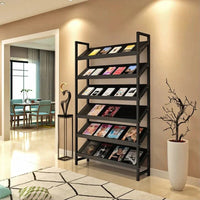
Bookcase Storage Cabinet 71 in Tall for Home Office
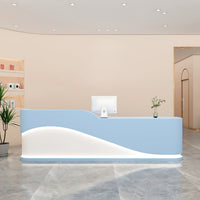
Curved Reception Desk 47-94 in Wide with Keyboard Tray, File Drawers & LED Lighting
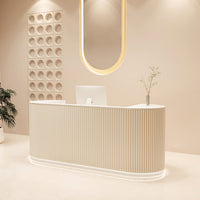
Curved Reception Desk 63-142 in Wide with Keyboard Tray, File Drawers & Fluted Front
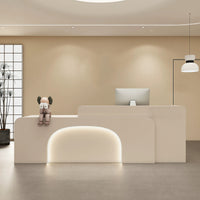
Curved Reception Desk 47-150 in Wide with LED Lighting, Keyboard Tray & File Drawers

Ergonomic Office Chair with Swivel, Curved & Dual-Tone for Home Office

Modern Executive Desk 25-110 in Wide with Side Storage for Home Office
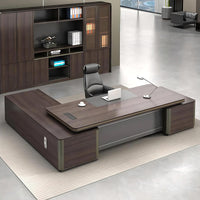
Modern Executive Desk 22-126 in Wide with Curved & Cable Management for Home Office
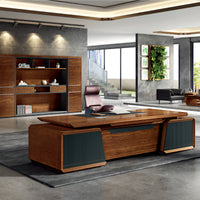
Modern Executive Desk 28-142 in Wide with Walnut for Home Office

Content Menu ● Understanding Cashier Counters >> Types and Configurations of Cashier Counters >>> Single Countertops >>> Dual and Multi-Station Cash Wraps >>> L-Shaped and U-Shaped Counters >> Size and Ergonomics >> Benefits of Cashier Counters >> Drawbacks...
Jul 31, 2025
Content Menu ● Understanding the Function of a Cashier Counter >> The Central Role of the Cashier Counter >> Types of Cashier Counters ● Key Design Considerations for High-Quality Cashier Counters >> Dimensions and Layout...
Jul 31, 2025
Content Menu ● Table of Contents ● Introduction: The Changing Role of the Cashier Counter ● Understanding Modern Cashier Counter Needs >> Key Functions Beyond Checkout >> How a Well-Designed Counter Impacts Small Business Success...
Jul 30, 2025