
My office
Your cart (0)
Your cart is ready for a fresh start.
Explore office furniture designed for focused, comfortable work.
Continue shoppingMy office
Explore office furniture designed for focused, comfortable work.
Continue shoppingContent Menu
● Understanding Executive Desks
>> What Defines an Executive Desk?
>> Importance of Desk Shape in Office Setup
● L-Shaped Executive Desk: Features and Benefits
>> Configuration and Design
>> Space Efficiency of L-Shaped Desks
>> Advantages of L-Shaped Executive Desks
>> Ideal Use Cases for L-Shaped Desks
● U-Shaped Executive Desk: Features and Benefits
>> Configuration and Design
>> Space Requirements and Layout Impact
>> Advantages of U-Shaped Executive Desks
>> Ideal Use Cases for U-Shaped Desks
● Comparing L-Shaped and U-Shaped Executive Desks
● Important Considerations Before Choosing
>> Office Size and Layout
>> Work Style and Needs
>> Storage and Organization
>> Budget Constraints
>> Aesthetic and Office Culture
● Enhancing Productivity with the Right Desk Shape
>> Maximizing Workflow with L-Shaped Desks
>> Optimizing Collaboration with U-Shaped Desks
>> Ergonomic Tips for Both Desk Types
● Materials and Finish Options
>> Popular Materials for Executive Desks
>> Matching Desk Finishes with Office Decor
● Customization and Accessories
>> Add-Ons for Executive Desks
>> Choosing Accessories Based on Desk Shape
● Frequently Asked Questions (FAQs)
When it comes to outfitting an executive office, the choice of desk plays a crucial role in productivity, aesthetics, and space management. Two popular configurations stand out for their functionality and style: L-shaped and U-shaped executive desks. Both designs offer unique benefits and suit different office layouts, work habits, and personal preferences. This article dives deeply into the features, advantages, disadvantages, and key considerations to help you decide which desk shape fits your professional needs best.

An executive desk typically refers to a large, sturdy, and well-designed desk that reflects professionalism and authority. It provides ample surface area and storage to accommodate the demands of an executive's daily tasks, meetings, and paperwork. Executive desks often become a focal point of the office, marrying form with function.
The shape of the desk influences workflow, movement, accessibility, and even communication. It can either enhance comfort and efficiency or cause clutter and inconvenience. Choosing between L-shaped and U-shaped desks depends largely on how you use your workspace and the physical dimensions of your office.
An L-shaped desk consists of two rectangular surfaces joined at a right angle, forming an "L". This configuration offers a dedicated primary workspace and an additional secondary surface, which can be used for computers, paperwork, or collaborative tasks.
- Utilizes corner space effectively, making it ideal for medium-sized rooms.
- Provides clear separation between work zones without requiring extensive floor space.
- Fits well in both square and rectangular rooms, allowing flexible positioning.
1. Dual Work Zones: Allows multitasking by separating different types of work, such as computer use and document review.
2. Compact Layout: Takes less floor space than U-shaped desks, offering ample room for movement and additional furniture.
3. Cost-Effective: Generally less expensive than U-shaped desks due to simpler construction.
4. Easy Installation: Typically easier to assemble and place, even in tight office layouts.
- Executives who need clear but limited working zones.
- Offices with moderate space where a full U-shape would be cramped.
- Professionals who entertain occasional visitors but focus mainly on personal productivity.
The U-shaped desk expands on the L-shaped design by adding a third surface parallel to the original side, forming a "U". This creates an almost enclosed workspace surrounded on three sides by desk surfaces.
- Requires a larger office space to accommodate the wide configuration.
- Provides extensive surface area, enhancing the ability to organize multiple devices, files, and work materials simultaneously.
- Creates a commanding presence in the office, emphasizing authority and control.
1. Maximum Work Surface: Ample room for multitasking, with distinct areas for computers, meetings, and paperwork.
2. Enhanced Organization: Separate zones allow easy categorization of tasks and materials.
3. Professional Appeal: Conveys a sense of status and professionalism due to its size and layout.
4. Improved Collaboration: The open end of the "U" can serve as a meeting area within the workspace, fostering face-to-face communication.
- Executives with large offices and extensive organizational demands.
- Those who frequently host meetings or collaborate at their desk.
- Professionals managing multiple projects requiring distinct zones for each.
| Feature | L-Shaped Desk | U-Shaped Desk |
|---|---|---|
| Space required | Moderate | Large |
| Work surface area | Ample | Extensive |
| Suitable for small offices | Yes | No |
| Price range | More affordable | Generally higher |
| Ease of installation | Relatively easy | More complex |
| Collaboration friendly | Limited | High |
| Storage options | Moderate | Highest |
| Visual impact | Professional, compact design | Commanding, authoritative |
Measure your available office space carefully. L-shaped desks fit comfortably in most medium offices. U-shaped desks need a room large enough to accommodate movement around the desk without feeling cramped.
Evaluate how you work daily. Do you require multiple monitors, paper files, or space for meetings at your desk? U-shaped desks support complex workflows better, while L-shaped desks support straightforward multitasking.
Consider storage built into desks. U-shaped desks usually have more built-in cabinets and drawers, which is important if you store many documents or tools. L-shaped desks may require additional filing units.
L-shaped desks are generally more affordable and easier to customize. U-shaped desks, due to their size and complexity, tend to be more expensive but offer more workspace and storage.
Executives often want their desk to reflect their professional image. U-shaped desks create a powerful executive presence, while L-shaped desks offer a more understated, modern professional look.
Position the primary workspace facing the door or window to minimize distractions. Use the secondary surface for computers or active files. This arrangement supports quick switching between tasks.
Arrange seating along the open side of the "U" for meetings. Keep frequently used items within arm's reach. The enclosed nature helps maintain focus while allowing multiple participants to gather comfortably.
- Ensure ample leg space and desk height tailored to your chair.
- Use cable management systems to keep cords organized.
- Include adjustable task lighting to reduce eye strain.
- Position monitors at eye level to maintain good posture.
Choosing the right materials affects durability, style, and maintenance.
- Wood Veneer: Offers a classic, professional look.
- Solid Wood: Durable and prestigious but expensive.
- Laminate: Cost-effective and easy to clean.
- Glass: Modern and sleek but less practical for heavy use.
- Metal Accents: Add durability and contemporary style.
- Dark finishes like mahogany or walnut exude traditional elegance.
- Lighter finishes like maple or oak complement modern, casual offices.
- High-gloss or matte finishes can be chosen based on lighting and desired atmosphere.
- Integrated lighting
- Cable trays and holders
- Keyboard trays
- Built-in power outlets and USB ports
- Privacy panels or modesty panels
L-shaped desks benefit from corner shelving units attached to the secondary surface. U-shaped desks may incorporate modular storage cubes along the rear surfaces. Personalized decor and workspace organizers improve overall ambiance and focus.

Q1: Which desk shape is better for a smaller office?
A1: L-shaped desks are generally better suited for smaller offices due to their space-efficient design.
Q2: Can U-shaped desks fit in a corner workspace?
A2: U-shaped desks typically require more open space and may not fit well in tight corners.
Q3: Are L-shaped desks more affordable than U-shaped?
A3: Yes, L-shaped desks tend to be less expensive because they use fewer materials and have simpler construction.
Q4: Which desk type supports multitasking better?
A4: U-shaped desks provide more surface area, making them ideal for complex multitasking and organizing multiple work zones.
Q5: How important is customization in choosing between these desks?
A5: Customization can enhance functionality, especially with storage, lighting, and cable management tailored to specific work habits.
Hot Tags: China, Global, OEM, private label, manufacturers, factory, suppliers, manufacturing company

Leather Executive Office Chair with Genuine Leather, Solid Wood & Lumbar Support

Mesh Ergonomic Office Chair with Breathable Mesh & Lumbar Support for Executive Office
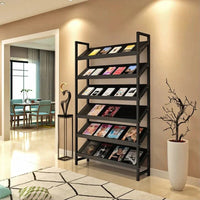
Bookcase Storage Cabinet 71 in Tall for Home Office
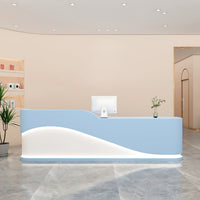
Curved Reception Desk 47-94 in Wide with Keyboard Tray, File Drawers & LED Lighting
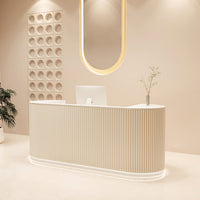
Curved Reception Desk 63-142 in Wide with Keyboard Tray, File Drawers & Fluted Front
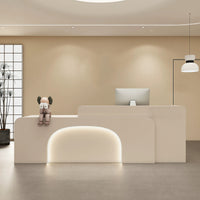
Curved Reception Desk 47-150 in Wide with LED Lighting, Keyboard Tray & File Drawers

Ergonomic Office Chair with Swivel, Curved & Dual-Tone for Home Office

Modern Executive Desk 25-110 in Wide with Side Storage for Home Office

Executive Office Desk with Built-In Power and Storage
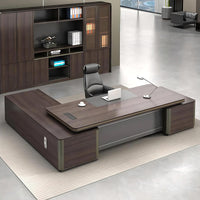
Modern Executive Desk 22-126 in Wide with Curved & Cable Management for Home Office
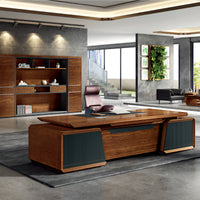
Modern Executive Desk 28-142 in Wide with Walnut for Home Office

Practical L-Shaped Side Storage Executive Desk with Cable Management

Content Menu ● Understanding the Role of Executive Desks in Branding >> What is an Executive Desk? >> How Executive Desks Reflect Your Brand's Identity ● Key Features of Executive Desks That Boost Brand...
Oct 15, 2025
Content Menu ● Understanding Executive Desks >> What Defines an Executive Desk? >> Features of Executive Desks >> Benefits for Workflow ● Exploring Standing Desks >> Definition and Types of Standing Desks >> Key Features >> Advantages for...
Oct 15, 2025
Content Menu ● Understanding Modern Executive Desks >> What Defines a Modern Executive Desk? >> Why Choose Modern Designs? ● Features of Minimalist Executive Desks >> Essential Design Elements >> Functional Benefits ● Characteristics of Luxury Executive...
Oct 16, 2025